Baby Jessica Rescue – The 58 Hours Underground That Turned One Texas Well Into a Global Vigil
9 min readJuly 29, 2025
By the time the adults heard the scream, the child was already gone.
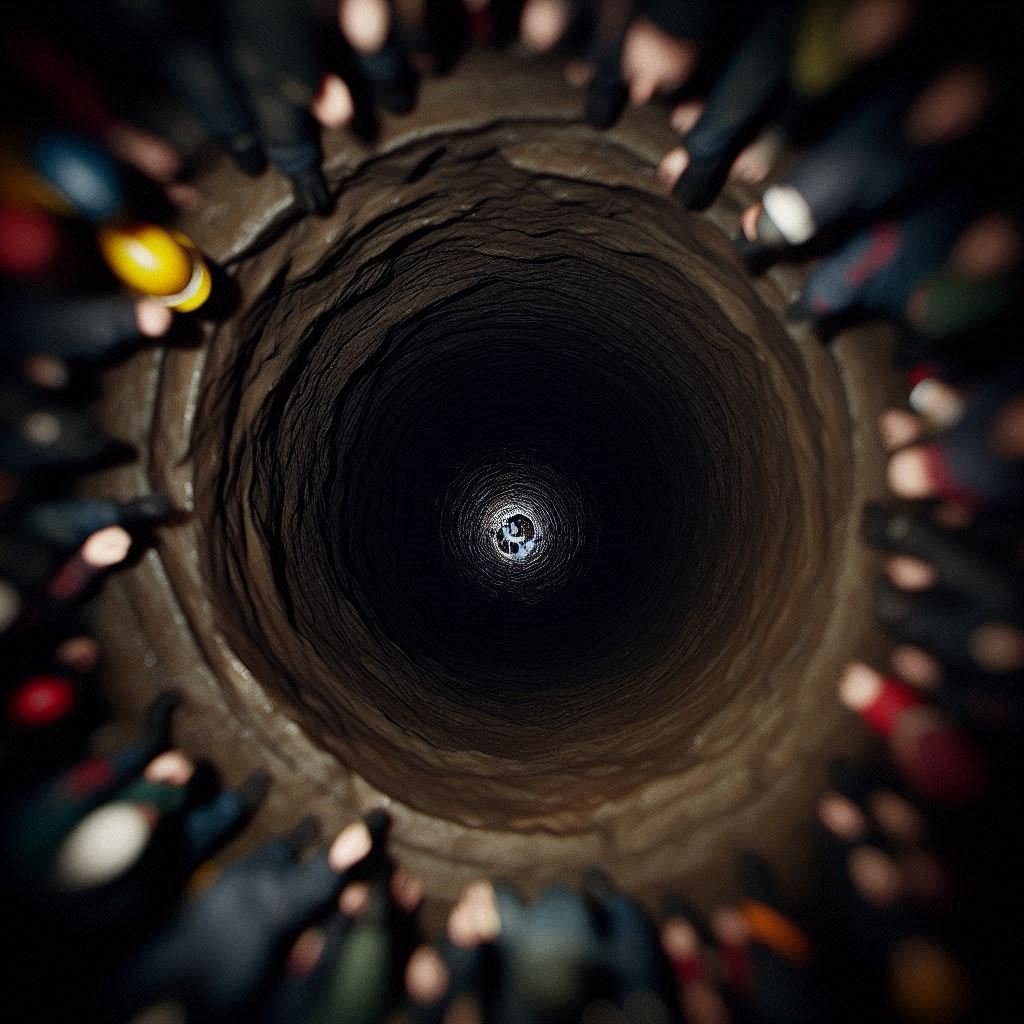
One second, 18-month-old Jessica McClure was playing in a Midland, Texas backyard on a warm October afternoon. The next, she had slipped into a dark opening in the ground so narrow most adults could barely fit a forearm inside it. There was no dramatic crash. No long warning. Just a tiny body swallowed by an abandoned well, and then the sound every person at that house would remember for the rest of their lives: a little girl crying from somewhere under the earth.
That sound changed everything. The yard stopped being a yard. It became a hole in the world.
Listen to “Baby Jessica” on Spreaker.
The Baby Jessica rescue is the real story of Jessica McClure, the Texas toddler who fell about 22 feet into an eight-inch-wide well on October 14, 1987, and survived after a 58-hour rescue watched around the world. Decades later, the case still matters because it was not just a miracle survival story. It was also a brutal test of engineering, endurance, and the frightening math of how much time a trapped child could have left.
Stories like the Andes plane crash are remembered for what people endured after disaster struck, but Baby Jessica was different in one terrifying way: everyone knew exactly where she was, and that somehow made the helplessness worse.
On October 14, 1987, Jessica was at her aunt Angela Bradberry’s home in Midland. It should have been an ordinary afternoon. Family was nearby. Children were playing. The setting felt safe in the way familiar places usually do. That illusion lasted until Jessica moved near an old water well in the yard.
The shaft was shockingly narrow, around eight inches across, and had been covered. At some point the opening was exposed. In an instant, Jessica slipped in headfirst and dropped deep into the pipe. When adults ran to the opening and looked down, they could not see her clearly. They could only hear her.
That detail gave the rescue its haunting shape from the very beginning. Jessica was alive. People could talk to her. But no one could reach her. The well was too tight, too deep, and too unstable. Any attempt to force the issue could kill her.
Emergency crews arrived fast, and the first truth they had to accept was awful: no rescuer was going down that shaft.
Timeline of the Baby Jessica Rescue
October 14, 1987: Jessica McClure falls into the abandoned well in Midland, Texas.
Initial hours: Firefighters, police, and medical crews confirm she is alive but trapped too tightly to be pulled straight up.
Rescue plan forms: Workers begin drilling a parallel shaft beside the well so they can tunnel sideways toward her position.
Overnight and into the next day: Drilling slows as rescuers hit hard rock. Crews rotate in shifts while microphones and support lines monitor Jessica below.
National coverage grows: Television networks broadcast the rescue continuously, turning the site into a global vigil.
Final phase: After the parallel shaft reaches depth, rescuers hand-dig a horizontal tunnel toward Jessica.
October 16, 1987: After roughly 58 hours underground, paramedic Robert O’Donnell helps pull Jessica free alive.
Why the Rescue Was So Hard
From a distance, some survival stories look simple. Find the victim. Reach the victim. Pull the victim out. The Baby Jessica rescue destroyed that fantasy almost immediately.
The well was only about eight inches wide. Jessica was wedged roughly 22 feet below ground. Reports from the rescue said she was pinned awkwardly, with one leg bent and her forehead pressed against the wall. The shaft around her was not a clean, easy tube. It was cramped, rough, and dangerous. If the earth shifted or a drilling vibration carried the wrong way, the child could be crushed or buried deeper.
So the rescue became an engineering race. The main plan was to drill a separate shaft next to the well and then dig horizontally into the side near Jessica’s position. That sounds straightforward until you picture the actual conditions: unstable dirt in one section, hard rock in another, heat from machinery above, exhaustion below, and a trapped toddler whose condition could worsen minute by minute.
Local oil workers, drillers, engineers, firefighters, paramedics, and volunteers all became part of the same desperate machine. The rescue site never really slept. Tools changed hands. Shifts blurred together. Men crawled in and out of the parallel shaft coated in dirt and sweat, trying to move fast without making the one mistake that would end the story in the worst possible way.
What Doesn’t Add Up to Most People Until They See the Scale
One reason this story still grips people is that the physical reality feels almost impossible. A child trapped in an opening narrower than a soda can sounds like something the brain resists. But the rescue was real, and the details explain why the world became obsessed.
The shaft was too narrow for direct rescue. There was no heroic climb-down option.
The depth was survivable but dangerous. Jessica was deep enough to be badly injured and trapped, but not so deep that rescuers lost hope.
Her position mattered. Being wedged prevented a farther fall, but it also made extraction more difficult and painful.
The earth fought the rescue. Drilling through rock slowed progress when speed mattered most.
Every delay had a human cost. Jessica was cold, dehydrated, frightened, and exposed to shock for more than two full days.
That combination is what turned the rescue into a pressure chamber. The problem was not only getting to her. It was getting to her before her body gave out.
The Hours When the World Started Watching
As the rescue dragged on, Midland stopped feeling like one town in Texas and started feeling like the center of the world. Television crews arrived. Reporters gave live updates through the night. Millions of people who had never heard of Jessica McClure suddenly knew her name.
What kept people watching was the unbearable intimacy of it. This was suspense in real time. Everyone knew there was a little girl underground, and everyone knew adults were hours away from either saving her or failing in public.
Families prayed in living rooms. At the site, rescuers kept working under floodlights, noise, and constant pressure. If you’ve read Yossi Ghinsberg’s fight to survive the Amazon, you know some survival stories become psychological tests as much as physical ones.
How Jessica Survived
For all the attention on the drilling, one of the most remarkable parts of the case is that Jessica stayed alive long enough for the rescue to work.
She became wedged instead of falling endlessly. That likely prevented even worse trauma.
Rescuers monitored and supported her constantly. They used microphones and other equipment to track her condition and keep some line of contact.
The rescue adapted instead of rushing. The parallel-shaft strategy was slower than anyone wanted, but it avoided the fatal risks of a reckless direct attempt.
Skilled local workers understood the ground. Oil-field and drilling experience mattered. This was not generic digging.
Jessica endured far more than her age should have allowed. She was only 18 months old, injured, cold, and trapped in darkness for nearly two and a half days.
She did not come out untouched. Jessica suffered cuts, head injuries, and serious strain to her body. She later lost a toe. But when people call her survival miraculous, they are not just using dramatic language. They mean that dozens of small catastrophic possibilities never fully tipped over into disaster.
The Final Tunnel
The deeper crews drilled, the worse the pressure became. Hard rock slowed the descent of the parallel shaft. Time kept moving. Jessica’s cries came and went. At moments she was vocal, which brought relief. At other moments she went quiet, which did the opposite. Silence down that well meant everyone above had to imagine the worst.
Eventually the shaft beside her reached the needed depth, and the most delicate phase began. Rescuers had to move sideways through the earth toward the original pipe. This part demanded patience that probably felt impossible in the moment. One wrong move could collapse dirt into Jessica’s space or injure the men tunneling toward her.
Then, after nearly 58 hours, they broke through.
Paramedic Robert O’Donnell was among the rescuers in position when the opening reached Jessica. She was dirty, battered, and frightened, but alive. When they finally pulled her free on October 16, the release hit like a shockwave. The crowd erupted. News anchors broke. People who had spent two days bracing for tragedy suddenly had permission to breathe again.
In survival stories such as Beck Weathers on Everest or Steve Callahan alone at sea, rescue often comes after long isolation and shrinking hope. Baby Jessica compressed that same emotional arc into a hole in one backyard, and maybe that is why it still feels so raw.
Why This Rescue Still Gets Attention
The Baby Jessica rescue still gets attention because it contained everything people respond to in a real-story documentary: a child in immediate danger, a visible clock, exhausted rescuers trying to outwork physics, and somehow a real ending with a living child carried back into the light.
For 58 hours, the world had to sit with the possibility that effort might not be enough. That is the tension at the heart of the case.
FAQ
What happened to Baby Jessica?
Jessica McClure, known worldwide as Baby Jessica, fell into an abandoned well in Midland, Texas, on October 14, 1987. She was trapped about 22 feet underground for roughly 58 hours before rescuers reached her through a parallel shaft and horizontal tunnel.
How deep was the well Baby Jessica fell into?
Jessica was trapped about 22 feet down inside the well. The opening was extremely narrow, roughly eight inches wide, which is one reason a direct rescue was impossible.
How old was Baby Jessica during the rescue?
She was 18 months old when the accident happened. Her age made the rescue even more emotionally gripping, because she was too young to understand what was happening or help in any meaningful way.
How long did it take to rescue Baby Jessica?
The rescue took about 58 hours, stretching from October 14 to October 16, 1987. Crews worked almost nonstop, drilling a second shaft and then tunneling sideways to reach her safely.
Did Baby Jessica survive and recover?
Yes. Jessica McClure survived and recovered, though she suffered injuries and later lost a toe because of the trauma. Her survival remains one of the most famous rescue stories in modern American history.