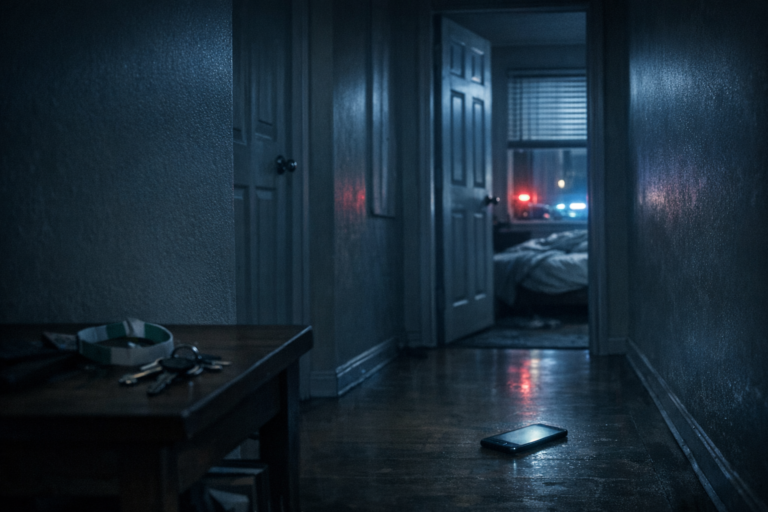
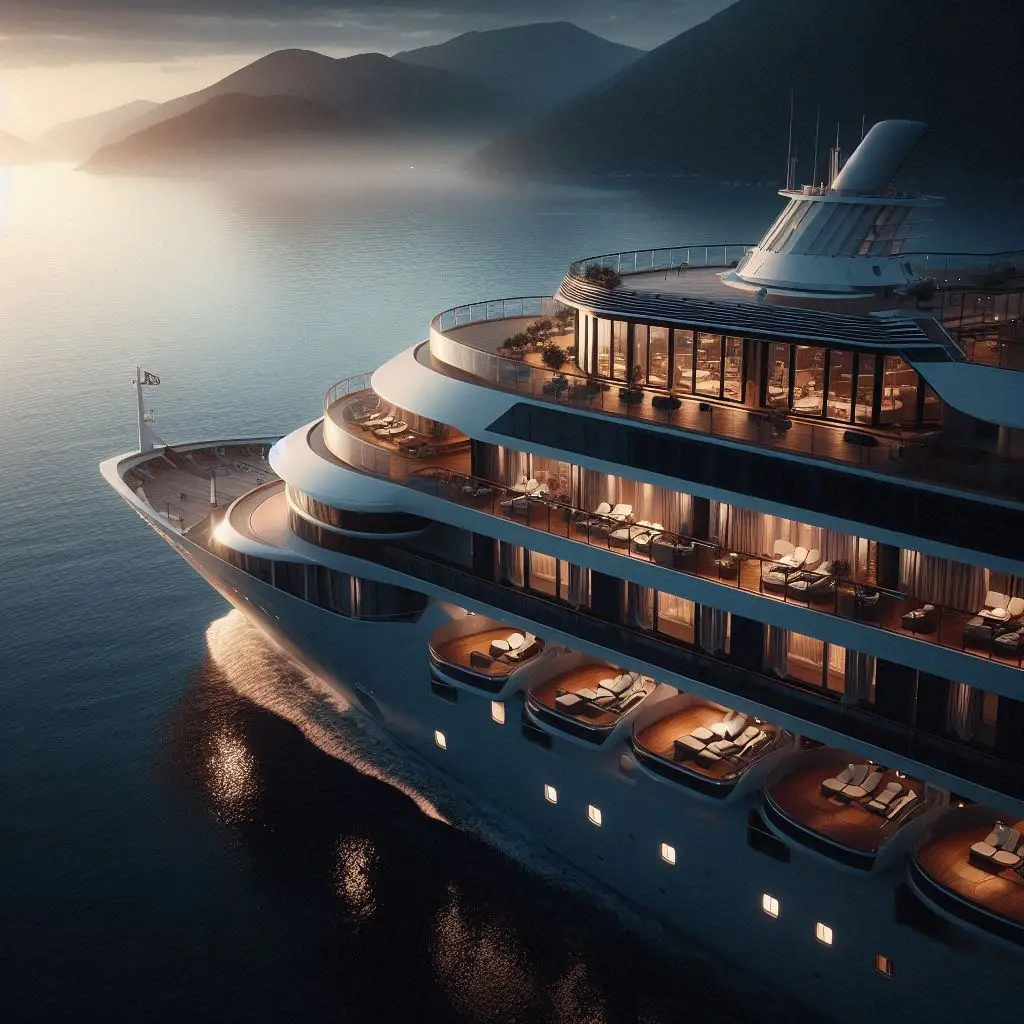
Just before dawn, Ron Bradley opened his eyes and looked toward the balcony of Cabin 8564. The Caribbean was still dark. The ship was gliding toward Curacao. And his daughter Amy was there, stretched out in a chair, close enough to make the moment feel ordinary. He went back to sleep. When he woke again, she was gone.
The Amy Lynn Bradley disappearance remains one of the most searched cruise ship mysteries because it combines a tight final timeline, a vanished 23-year-old passenger, and years of sightings that never settled into proof. More than two decades later, the case still matters because no one can say with confidence whether Amy went overboard, left the ship alive, or was taken in the small window before the vessel docked.
That is why this story still belongs beside cases like Amy Bradley Disappearance — What Happened to the Woman Who Vanished From a Cruise Ship?, which looks at the broader public mystery, and why it also connects naturally to Rebecca Coriam’s last-seen cruise ship disappearance, where a sealed environment somehow still produced no clear ending.
In March 1998, Amy Lynn Bradley was 23 years old, athletic, independent, and traveling with her family aboard Royal Caribbean’s Rhapsody of the Seas. The cruise was supposed to be simple: sun, food, music, island stops, and a week away from normal life. Instead, it became one of those cases people return to late at night because the setting feels like it should have made answers easier. A cruise ship is not an empty highway or a wilderness trail. It is a floating city with railings, cabins, passenger lists, crew schedules, and limited ways in or out. And yet Amy still vanished.
Timeline of Amy Bradley’s Final Hours
- March 21, 1998: Amy boards Rhapsody of the Seas with her parents, Ron and Iva Bradley, and her brother Brad.
- March 23, late evening: the family spends time on board as the ship travels between Aruba and Curacao.
- After midnight, March 24: Amy and Brad go to the ship’s disco and stay out late.
- Around 3:35 a.m.: Brad later says he and Amy returned toward the family cabin area.
- Around 5:15 a.m.: Ron Bradley wakes briefly and sees Amy on the cabin balcony.
- Around 6:00 a.m.: Amy is no longer there. Her family begins searching.
- About 6:30–7:00 a.m.: concern escalates as the ship approaches Curacao.
- After docking: Amy is officially treated as missing, but the crucial first window is already gone.
That timeline is the heart of the case. The gap between 5:15 and 6:00 in the morning is not long, but it is long enough for almost every theory to remain technically possible. If Amy went overboard, it may have happened in that narrow stretch. If she left the cabin voluntarily, she did it while most passengers were asleep and before the ship docked. If someone targeted her, they had a small but valuable period of confusion, darkness, and approaching port to work with.
The final night has been repeated so many times that some details blur at the edges, but the broad shape holds. Amy and Brad were out late at the ship’s disco. Amy was reportedly seen socializing, and later reporting focused on attention from men on board, including a band member often identified in coverage of the case. None of that proves a crime. But it matters because the case has never had the luxury of ignoring even small interpersonal details.
When Amy disappeared, many of her belongings were still in the cabin. People who plan to walk away usually take more of themselves with them. Amy did not seem to be starting a new life. She looked more like someone who expected to be gone for only a moment.
What Doesn’t Add Up About the Cruise Ship Window
- No clear witness to a fall: if Amy went overboard, no one came forward with a clean account of hearing or seeing it happen.
- No confirmed physical evidence: there was no final object, no obvious struggle, and no body recovered to close the question.
- The response timing remains controversial: the Bradley family has long believed the ship did not lock down quickly enough.
- Docking changed the stakes: once the vessel reached Curacao, the case was no longer only about where Amy might be on board.
- Later sightings kept the file open emotionally: even when leads failed, they prevented the simpler theories from ever feeling final.
The argument over the ship’s response still hangs over the case because time mattered more here than in most disappearances. If Amy was still on board, a fast lockdown could have narrowed everything. If she had left the cabin and reached a public area, an aggressive early search might have produced a witness. If foul play occurred, every minute before a full emergency response gave that theory more room to breathe. The family’s frustration was not just emotional. It was structural. Their daughter had vanished in one of the few settings where containment should have been possible.
The overboard theory has never gone away, and it deserves to be treated seriously. The ocean is merciless. People have disappeared from ships before, and the absence of a body does not rule it out. But it has never felt complete. Amy was physically capable, familiar with water, and by most accounts not the kind of person people imagine casually toppling over a rail without a trace. That does not make such a fall impossible. It only explains why the theory never brought peace.
The second major theory is that Amy left the cabin and encountered the wrong person in the wrong moment. That possibility remains powerful because cruise ships create a false sense of safety. The setting is controlled, but not intimate. Thousands of people pass each other in hallways, on decks, near bars, and around stairwells. A determined predator does not need the whole ship. They only need a blind spot, a believable reason to speak, and a few minutes before anyone realizes a person is truly missing.
That is one reason Amy’s case now links so naturally with unsolved disappearances with witness sightings that only made the mystery stranger. Once sightings entered the Bradley case, it stopped being only a cruise-ship mystery and became something darker: a story where hope and horror started traveling together.
The Sightings: Documented Lead or False Hope?
Over the years, several reported sightings kept Amy Bradley’s name in circulation. Some were vague. Others were specific enough to hit the family like a fresh wound.
- Curacao-area reports: some leads suggested Amy may have been seen shortly after the ship docked, which fed the idea that she left the vessel alive.
- The Navy sailor report: one of the most disturbing claims came from a man who said a woman in a Barbados brothel identified herself as Amy Bradley and asked for help.
- The later photograph: an image circulating online was believed by some to resemble Amy, renewing trafficking fears without producing a definitive break.
These leads changed the emotional logic of the case. If every sighting was wrong, then they mostly functioned as cruel noise. But if even one was right, then Amy’s disappearance was not a sudden loss to the sea. It was a prolonged captivity story hidden inside a missing-person case.
The honest answer is that the sightings have never been clean enough to resolve anything. They remain powerful because they fit the timing so well. A ship nearing port. A woman vanishing before full daylight. A family unable to prove whether the critical failure happened on board or immediately after docking. That is the kind of uncertainty sightings feed on. And once that door opens, every resemblance becomes unbearable.
For readers who end up pulled toward cases where public places somehow fail to protect the people inside them, the Bradley case also shares something with the Madeleine McCann disappearance and even broader archive pages like Recent Disappearances That Still Have No Answers. In each one, the setting is not a deserted forest or a lonely highway. It is a place with rooms, staff, witnesses, and structure — and still the person disappears into a gap no one closes in time.
The darker trafficking theory survives because it explains what the overboard theory cannot: the later reported encounters, the family’s certainty that Amy would not voluntarily abandon them, and the absence of any evidence tying her final moment to the water. But it also depends on fragments that have never fully locked together. There has been no confirmed rescue, no verified photograph, no decisive witness, and no recovered proof strong enough to support charges.
🔎 Related Investigation:
If this case pulled you deeper into the mystery, continue into:
What Likely Happened?
There is no answer here that feels satisfying, which is exactly why the case still circulates. The two strongest explanations remain these: Amy either went overboard in the early-morning window before the family realized she was truly missing, or she left the cabin alive and encountered foul play somewhere between the ship and the chaos of docking. The sightings keep the second theory alive. The lack of physical proof keeps the first from ever becoming certain.
What makes Amy Bradley’s disappearance so unnerving is that neither explanation removes the feeling of preventable loss. If she went overboard, the family never got certainty. If she was taken, then the first failed responses may have cost the case its best chance.
FAQ
What happened to Amy Lynn Bradley?
Amy Lynn Bradley disappeared from Royal Caribbean’s Rhapsody of the Seas in the early morning hours of March 24, 1998, just before the ship docked in Curacao. No confirmed explanation has ever resolved whether she went overboard, left the ship alive, or was abducted.
Is the Amy Bradley case still unsolved?
Yes. Amy Bradley’s disappearance is still unsolved. Despite years of investigation, reported sightings, and FBI attention, there has never been a confirmed answer about her fate.
Why do people think Amy Bradley may have been trafficked?
That theory grew from later reported sightings, including claims that a woman identifying herself as Amy was seen under duress in the Caribbean. None of those reports fully proved trafficking, but they were strong enough to keep the possibility alive.
Did Amy Bradley fall overboard from the cruise ship?
It remains one of the main theories, but it has never been confirmed. No witness clearly saw Amy go overboard, and no body was recovered, which is why the case never settled around that explanation.
Why does Amy Bradley’s disappearance still get attention?
The case still gets attention because the timeline is so tight, the setting feels unusually contained, and the later sightings make the mystery feel less like a cold case and more like a story that may have slipped away during a brief, crucial failure.
🔎 Related Investigation:
🔎 If this story stayed with you, the author suggests these real cases next:
- The broader Amy Bradley mystery and why the cruise ship case never let go of the public
- The crew member who vanished from a Disney ship after one final camera moment
- The flight that disappeared over open water and left the world arguing over the final path
- The vacation disappearance that turned one family’s worst morning into a global mystery
- Other disappearances where the final known evidence only deepened the questions
Explore more Disappearances stories here: