Vanished for 18 Years: The Shocking True Story of Jaycee Dugard.
8 min readJuly 30, 2025
On a summer morning in 1991, eleven-year-old Jaycee Dugard disappeared while walking to her school bus stop in South Lake Tahoe, California. For nearly two decades, her family believed she might never come home. But hidden behind fences and tarps in a quiet backyard nearly 200 miles away, Jaycee was still alive — surviving one of the longest and most disturbing captivity cases in modern American history.Listen to “Jaycee Dugard” on Spreaker.
June 10, 1991, began like any ordinary summer morning in South Lake Tahoe.
The community felt quiet and safe. Children walked to school bus stops alone. Neighbors recognized each other. Nothing about the morning suggested that one of the most infamous kidnapping cases in American history was about to begin.
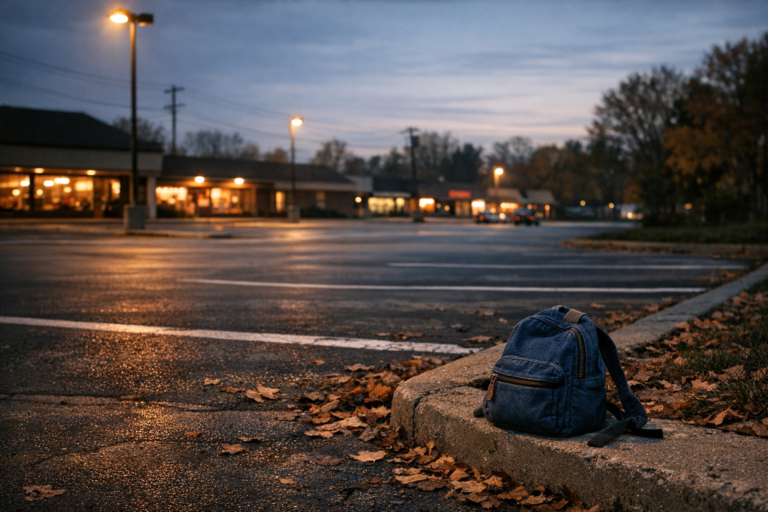
Eleven-year-old Jaycee Lee Dugard left home carrying her backpack and headed toward the bus stop near her neighborhood.
She never made it there.
According to witnesses, a car pulled up beside her. A man grabbed Jaycee and forced her into the vehicle before speeding away.
The kidnapping happened in broad daylight.
Even more horrifying, Jaycee’s stepfather, Carl Probyn, partially witnessed the abduction and immediately tried chasing the vehicle on his bicycle.
But the car disappeared.
And within seconds, Jaycee Dugard vanished from the world.
The Search That Slowly Went Cold
Police launched an enormous search effort almost immediately.
Investigators interviewed witnesses, distributed missing person flyers, and searched nearby areas for any sign of the child. News stations covered the case heavily. Jaycee’s face appeared across California as authorities desperately searched for answers.
But days turned into weeks.
Then months.
And eventually, the case began fading into the painful category shared by so many missing children investigations:
a disappearance with no clear answers.
For Jaycee’s mother, Terry Probyn, the uncertainty became unbearable. Like many families of missing children, she faced the impossible reality of not knowing whether her daughter was alive or dead.
But the truth was far stranger than investigators realized.
Jaycee had not disappeared forever.
She was being hidden in plain sight.
The Backyard Compound
After the abduction, Jaycee was taken to Antioch, California, nearly 200 miles away from her home.
There, she was held captive by Phillip Garrido and his wife, Nancy Garrido.
From the outside, the Garrido property looked relatively ordinary.
But hidden behind fences, tarps, sheds, and makeshift structures in the backyard was a concealed area where Jaycee would spend the next eighteen years.
Investigators later described the area as a bizarre hidden compound made from tents, storage sheds, and enclosed spaces designed to isolate her from the outside world.
At first, Jaycee was kept in extremely confined conditions.
She was isolated, controlled, threatened, and psychologically manipulated by Phillip Garrido, a convicted sex offender with a long criminal history.
Over time, Garrido attempted to reshape Jaycee’s understanding of reality itself.
He gave her a new identity.
Controlled her movements.
Repeatedly threatened her family.
And convinced her that escape would place everyone she loved in danger.
Those tactics became part of a long-term system of psychological control that kept Jaycee trapped for nearly two decades.
A Child Forced To Raise Children
During captivity, Jaycee gave birth to two daughters fathered by Phillip Garrido.
She was still a teenager.
The children grew up almost entirely inside the hidden backyard compound, isolated from normal society. According to later reports, the girls had limited interaction with the outside world and little understanding of ordinary daily life beyond the Garrido property.
Despite the circumstances, Jaycee tried to protect them as best she could.
She taught them basic skills.
Created routines.
And attempted to provide some sense of normalcy inside an environment built on fear and control.
That part of the story continues to affect many people deeply.
Jaycee was not only surviving captivity herself —
she was trying to help two children survive it too.
How Did Nobody Discover It?
One of the most disturbing questions surrounding the Jaycee Dugard case is how the captivity continued for eighteen years without discovery.
Especially because Phillip Garrido was already known to law enforcement.
He was a convicted sex offender and registered parolee who regularly interacted with parole officers.
Yet despite those check-ins, the hidden compound in the backyard remained undiscovered for years.
Investigations later revealed repeated missed warning signs.
Neighbors occasionally noticed unusual activity.
Authorities visited the property at various times.
And Garrido himself displayed increasingly bizarre public behavior involving religious delusions and erratic conduct.
But no one fully uncovered what was happening behind the fences.
The case became a devastating example of how manipulation, secrecy, and system failures can combine to hide horrific situations in seemingly ordinary neighborhoods.
The Visit That Changed Everything
In August 2009, Phillip Garrido visited the University of California, Berkeley campus accompanied by two teenage girls — Jaycee’s daughters.
He wanted permission to host a religious event on campus.
During the interaction, campus police officer Allison Jacobs immediately felt something was wrong.
Garrido behaved strangely.
The girls appeared nervous and socially isolated.
And the entire situation made Jacobs deeply uncomfortable.
She later contacted Garrido’s parole officer and urged authorities to investigate further.
That decision changed everything.
Days later, Garrido appeared at a parole office interview and brought Jaycee with him.
She was now twenty-nine years old.
For years she had used the name “Allissa” while under Garrido’s control. But during questioning, investigators began noticing inconsistencies in the family’s story.
Eventually, Jaycee revealed the truth.
After eighteen years of captivity, she identified herself as Jaycee Dugard.
The Moment The World Learned She Was Alive
The announcement shocked the country.
A missing child who vanished in 1991 had been found alive nearly two decades later.
For Jaycee’s family, the moment felt almost impossible to process.
Her mother, who had spent years refusing to give up hope completely, suddenly learned her daughter was alive and returning home.
But the rescue also revealed the horrifying reality of what had happened during those lost years.
Police searching the Garrido property uncovered the hidden compound Jaycee described — the sheds, tents, locks, and concealed areas where she and her daughters had lived.
The discovery horrified investigators nationwide.
The Psychological Impact Of Captivity
Cases involving long-term captivity often leave deep psychological effects that continue long after physical freedom is restored.
Experts later explained that victims surviving prolonged coercive control may develop complex emotional bonds, survival behaviors, and fears that outsiders struggle to understand.
In Jaycee’s case, years of threats, isolation, manipulation, and dependency created an environment where survival required constant adaptation.
That reality explains why many captivity victims do not simply “run away” even when occasional opportunities appear possible.
Fear becomes part of daily life.
So does survival.
The Road Back To Life
After her rescue, Jaycee faced the enormous challenge of rebuilding a life that had been stolen from her since childhood.
She and her daughters gradually adjusted to a world they had barely experienced.
Simple things — stores, schools, public spaces, conversations with strangers — required adaptation.
But over time, Jaycee chose not to disappear from public life completely.
Instead, she spoke openly about survival, trauma, recovery, and resilience.
She later wrote the memoir A Stolen Life, sharing her experience in her own words rather than allowing others to define her story.
She also created organizations supporting trauma survivors and families affected by violence.
That transformation became one of the most remarkable parts of the entire case.
Jaycee Dugard was not only rescued.
She eventually found a way to reclaim her voice.
The Sentencing
In 2011, Phillip Garrido pleaded guilty to kidnapping and assault charges connected to Jaycee Dugard’s captivity.
He was sentenced to 431 years to life in prison.
Nancy Garrido also received a lengthy prison sentence for her role in the crimes.
Neither will ever be released.
Why The Jaycee Dugard Case Still Haunts People
The Jaycee Dugard case continues disturbing people for several reasons.
Partly because of the sheer length of the captivity.
Partly because it happened inside an ordinary residential neighborhood.
And partly because so many opportunities existed where intervention might have changed the outcome years earlier.
The case also forced uncomfortable questions about parole supervision, system failures, and society’s ability to overlook hidden suffering occurring nearby.
But despite all of that darkness, the story also became something else:
a rare story of survival.
Not survival in the dramatic Hollywood sense.
But survival through endurance, adaptation, and the refusal to completely lose hope even under unimaginable circumstances.
Frequently Asked Questions About Jaycee Dugard
Who kidnapped Jaycee Dugard?
Jaycee Dugard was kidnapped in 1991 by Phillip Garrido and his wife Nancy Garrido.
How long was Jaycee Dugard missing?
Jaycee Dugard was missing for approximately eighteen years before being discovered alive in 2009.
Where was Jaycee Dugard held?
She was held in a hidden backyard compound at the Garrido property in Antioch, California.
How was Jaycee Dugard found?
Authorities became suspicious after Phillip Garrido visited the UC Berkeley campus with two girls, leading parole officers to investigate further.
What happened after Jaycee was rescued?
After her rescue, Jaycee rebuilt her life, wrote a memoir, and became an advocate supporting trauma survivors.
Closing Thoughts
Some disappearances end with answers.
Others end with tragedy.
And then there are rare cases like Jaycee Dugard’s —
cases where survival itself almost feels impossible.
For eighteen years, a missing child lived hidden behind fences while the world assumed she was gone forever.
Yet somehow, despite isolation, fear, manipulation, and unimaginable trauma, Jaycee endured long enough to eventually come home.
And that may be the most extraordinary part of the story.
Not simply that she survived.
But that after everything taken from her, she still found the strength to rebuild a life beyond captivity.