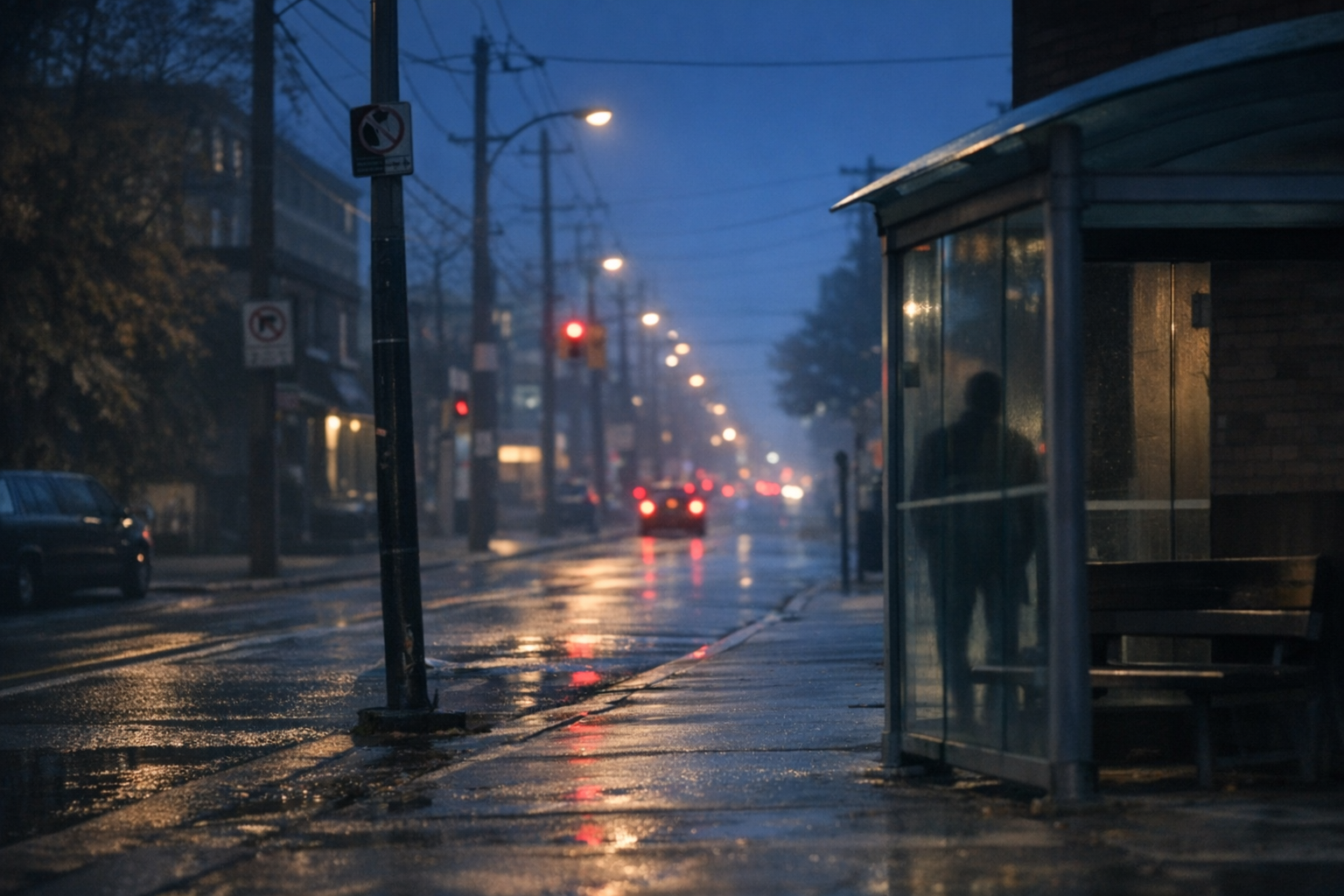
There is a special kind of cruelty in an unsolved disappearance when someone may have seen the missing person after the case should have become easier to understand. A witness sighting sounds like progress. It sounds like movement, proof, survival, direction. But in some of the most haunting disappearance cases, the sighting does not narrow the truth. It breaks the case open wider. Suddenly the timeline is longer than investigators thought, or stranger than the evidence should allow, or divided between mutually incompatible explanations that all seem possible for just long enough to keep the mystery alive.
This page covers unsolved disappearances where witness sightings, possible later encounters, or sighting-adjacent evidence made the mystery stranger instead of solving it. Some of these cases involve a person who may have been seen after the key disappearance window. Others involve surveillance, near-sightings, or contested later reports that changed how the case had to be understood. What unites them is not simply that someone vanished. It is that visibility itself became unreliable.
These cases matter because witness evidence is supposed to help investigators shrink the unknown. A credible sighting should narrow geography, tighten timing, and clarify whether the missing person was alive, moving voluntarily, or in danger. When that process fails, the disappearance takes on a different kind of staying power. Readers are left not with total absence, but with unstable presence — the far more maddening feeling that the truth may have flashed into view and still slipped away.
Readers who land on disappearance archives are often trying to compare patterns, not just consume one case. A sighting-driven disappearance carries a recognizable investigative shape: somebody may have seen the missing person, or something close to the missing person’s later path, but that apparent clue never matures into certainty. The result is a category of mysteries that feel frustratingly close to resolution while remaining stubbornly unresolved.
Cases Where Seeing More Somehow Explained Less
Kyran Durnin
Kyran Durnin’s disappearance carries the particular dread of a case where people keep searching for one confirmed moment that will settle whether the child was last seen where the official story places him — or somewhere else entirely. In child disappearance cases, witness claims matter because even one credible later sighting can blow apart the assumed timeline. That possibility is part of what keeps the case so active and so uneasy.
Witness-driven uncertainty changes the emotional texture of everything. It turns a search for the last known moment into a search for the last true moment. That is a different and darker problem.
The key mystery point is whether any later-seeming trace or conflicting account actually shifts the known timeline, or whether the case remains trapped inside an unresolved early gap.
There is also a larger investigative reason these cases linger. A witness sighting changes the emotional contract of the mystery. Families, readers, and investigators stop asking only where the person vanished. They begin asking whether the person remained in motion after the official last-known moment, whether the case geography widened, and whether a solvable clue briefly existed in public and still evaporated.
Readers are not only looking for people who vanished. They are looking for the cases where later visibility made the story less stable, not more. A sighting should reduce doubt. In these disappearances, it enlarges it.
It also means these stories naturally connect to neighboring sub-angles on the site: disappearances caught on camera, final-hours cases, route-and-timeline breakdowns, and evidence-centered mysteries where one clue appears to promise clarity and instead multiplies the possible explanations.
For the deeper timeline and the unresolved questions surrounding Kyran, see: Kyran Durnin Disappearance — The Boy Who Vanished Without a Trace.
The Springfield Three
The disappearance of Sherrill Levitt, Suzie Streeter, and Stacy McCall in 1992 remains one of the most unsettling multi-person vanishings in American crime history. Part of the reason is that possible sightings of the women, or of their vehicles and movements, have surfaced over time without ever stabilizing into certainty. In a case this public, every reported glimpse feels potentially enormous — and almost immediately becomes another layer of uncertainty.
The Springfield Three belong here because witness-sighting mysteries scale strangely when there are multiple missing people. Instead of one possible later trace, the case has generated a fog of possibilities that should have produced a breakthrough and never did.
The key mystery point is whether any later report genuinely captured part of the women’s fate or simply reflected the gravitational pull of a case so famous that uncertainty kept attaching itself to it.
There is also a larger investigative reason these cases linger. A witness sighting changes the emotional contract of the mystery. Families, readers, and investigators stop asking only where the person vanished. They begin asking whether the person remained in motion after the official last-known moment, whether the case geography widened, and whether a solvable clue briefly existed in public and still evaporated.
Readers are not only looking for people who vanished. They are looking for the cases where later visibility made the story less stable, not more. A sighting should reduce doubt. In these disappearances, it enlarges it.
It also means these stories naturally connect to neighboring sub-angles on the site: disappearances caught on camera, final-hours cases, route-and-timeline breakdowns, and evidence-centered mysteries where one clue appears to promise clarity and instead multiplies the possible explanations.
Read the full case and the long-running debate around what may have been seen after the disappearances here: The Springfield Three Disappearance — How Three Women Vanished Without a Trace.
Jodi Huisentruit
Jodi Huisentruit vanished outside her apartment in 1995, and the case has always had the shape of a narrowly timed abduction. But what keeps it alive is not just the violence implied at the scene. It is the enduring sense that someone may have seen the critical movement, the suspicious vehicle, or Jodi herself during a vanishing window that should have produced more certainty than it ever did.
Jodi fits this roundup because witness-sighting cases are not always about dramatic years-later claims. Sometimes they are about the brutal importance of immediate sightings that should have solved the mystery and somehow did not. The case remains full of near-information.
The key mystery point is that the disappearance happened in a public enough setting that the truth feels like it should have crossed someone’s line of sight clearly enough to identify.
There is also a larger investigative reason these cases linger. A witness sighting changes the emotional contract of the mystery. Families, readers, and investigators stop asking only where the person vanished. They begin asking whether the person remained in motion after the official last-known moment, whether the case geography widened, and whether a solvable clue briefly existed in public and still evaporated.
Readers are not only looking for people who vanished. They are looking for the cases where later visibility made the story less stable, not more. A sighting should reduce doubt. In these disappearances, it enlarges it.
It also means these stories naturally connect to neighboring sub-angles on the site: disappearances caught on camera, final-hours cases, route-and-timeline breakdowns, and evidence-centered mysteries where one clue appears to promise clarity and instead multiplies the possible explanations.
For the final-morning reconstruction and the witness-timeline pressure points, read: The Morning Jodi Huisentruit Vanished — And the Timeline That Still Haunts Investigators.
Tara Calico
Tara Calico disappeared during a bike ride in New Mexico in 1988, but the case refused to stay inside that original moment. The reason is obvious: possible later images and witness claims created the terrifying possibility that Tara survived the initial disappearance and was seen afterward under unknown circumstances. That transformed the case from a roadside mystery into something far more psychologically haunting.
This is exactly the kind of case where witness-sighting logic makes the mystery worse. Without the later claims, the case would remain tragic and open-ended. With them, every theory has to account for the possibility that Tara lived past the first vanishing event, which radically changes what investigators and readers think they are trying to explain.
The key mystery point is whether any of the reported later sightings or images captured Tara at all — because if even one did, the entire structure of the case changes.
There is also a larger investigative reason these cases linger. A witness sighting changes the emotional contract of the mystery. Families, readers, and investigators stop asking only where the person vanished. They begin asking whether the person remained in motion after the official last-known moment, whether the case geography widened, and whether a solvable clue briefly existed in public and still evaporated.
Readers are not only looking for people who vanished. They are looking for the cases where later visibility made the story less stable, not more. A sighting should reduce doubt. In these disappearances, it enlarges it.
It also means these stories naturally connect to neighboring sub-angles on the site: disappearances caught on camera, final-hours cases, route-and-timeline breakdowns, and evidence-centered mysteries where one clue appears to promise clarity and instead multiplies the possible explanations.
Read the deeper case history and the disputed later clues here: Tara Calico Disappearance — The Polaroid That Turned a Missing Girl Into a Lasting Mystery.
Andrew Gosden
Andrew Gosden’s disappearance in 2007 might have remained a tightly bounded London timeline mystery if not for the possibility that people saw him afterward. Reported sightings, appeals, and recurring public claims kept widening the radius of the case. What should have been a short final known sequence — train journey, arrival, disappearance — became a story haunted by the idea that Andrew may have remained visible just beyond the official record.
Andrew fits this angle because the later-sighting problem changes how the case feels. It is no longer only about what happened in London that day. It is also about whether the trail kept flickering in ways investigators could never stabilize. That makes the case more expansive, but not more clear.
The key mystery point is that if Andrew was seen later, even briefly, then the disappearance was not confined to one city-day timeline the way people often imagine.
There is also a larger investigative reason these cases linger. A witness sighting changes the emotional contract of the mystery. Families, readers, and investigators stop asking only where the person vanished. They begin asking whether the person remained in motion after the official last-known moment, whether the case geography widened, and whether a solvable clue briefly existed in public and still evaporated.
Readers are not only looking for people who vanished. They are looking for the cases where later visibility made the story less stable, not more. A sighting should reduce doubt. In these disappearances, it enlarges it.
It also means these stories naturally connect to neighboring sub-angles on the site: disappearances caught on camera, final-hours cases, route-and-timeline breakdowns, and evidence-centered mysteries where one clue appears to promise clarity and instead multiplies the possible explanations.
For the full London timeline and the later-sighting tension around the case, go here: Andrew Gosden Disappearance — The Teen Who Took a One-Way Ticket to London.
🔎 Related Investigation:
If this case pulled you deeper into the mystery, continue into:
Why These Disappearances Still Don’t Make Sense
What these cases have in common is not one setting, one suspect type, or one final theory. It is a structural contradiction. The missing person may have remained visible in some way after the decisive moment, yet the case still failed to become legible. That contradiction matters because it changes how readers and investigators experience the mystery. A disappearance built on total silence is one thing. A disappearance built on possible glimpses, disputed encounters, camera fragments, and sightings that never settle into proof is something colder.
Witness-sighting cases also tend to divide people for a predictable reason: every later clue carries both hope and contamination. Hope, because a sighting can mean survival, movement, or a second chance to understand what happened. Contamination, because a weak or misread sighting can distort the timeline, scatter resources, and keep several incompatible narratives alive at once. That is why these cases linger so hard in public memory. They are not only unsolved. They are unstable.
They connect naturally to other disappearance sub-angles already growing on the site: final-hours mysteries, camera-driven cases, abduction windows, and evidence contradictions. Once a reader finishes one case where a later sighting changed everything and solved nothing, the next case feels like part of the same documentary archive rather than a random adjacent article.
Conclusion
A witness sighting should be a gift to an investigation. It should move the case forward. It should tell everyone where to look next. In the disappearances above, it does something harsher. It creates motion without closure. The missing person seems to re-enter the world just enough to make the mystery more painful, then vanishes again into uncertainty.
That is why these stories remain so powerful. They do not merely ask what happened to someone who disappeared. They ask why visibility failed. Why being seen, or possibly seen, or almost seen, still was not enough to turn uncertainty into truth. In a disappearance case, that may be the cruelest pattern of all: not a total lack of clues, but clues that arrive looking like answers and leave behind even stranger questions.
These are not just sad unsolved cases. They are cases where evidence and human perception collided, and where the public was left with the chilling sense that the truth may have passed through ordinary eyes without staying long enough to be captured. That is exactly the kind of documentary pattern readers remember, revisit, and compare across an entire cluster.
🔎 If this story stayed with you, the author suggests these deeper investigations next:
- Disappearances where the final hours become the whole mystery
- Cases where the timeline itself refuses to cooperate
- Disappearances where the evidence seems to lean in one direction
- Last Seen on Surveillance: 6 Disappearances Where the Final Footage Only Deepened the Mystery
- What Happened After the Car Was Found? 6 Real Disappearances Where the Vehicle Was Recovered but the Person Was Not
- Unsolved Disappearances Where the Last Phone Call Still Doesn’t Make Sense
Explore more Disappearances stories here: