DeOrr Kunz Jr. was reported missing during a family camping trip on July 10, 2015.
He was two years old. The reported disappearance at Timber Creek Campground near Leadore, Idaho, brought searchers into remote, mountainous country.
No verified account explains how he disappeared.
DeOrr Kunz Jr.’s unsolved disappearance remains one of Idaho’s most haunting missing person cases because the mystery begins before the search even starts. Nearly every major question in the case leads back to the campground timeline: who actually saw him, when they saw him, and why those answers have never settled into one version of the truth.
That is what keeps DeOrr’s name alive. Like other cases where the last known movements refuse to lock into place — including these disappearances with final timelines that still don’t close — the most disturbing part is not just that he vanished, but that the final ordinary minutes before he vanished still feel unstable.
The Camping Trip That Should Have Been Uneventful
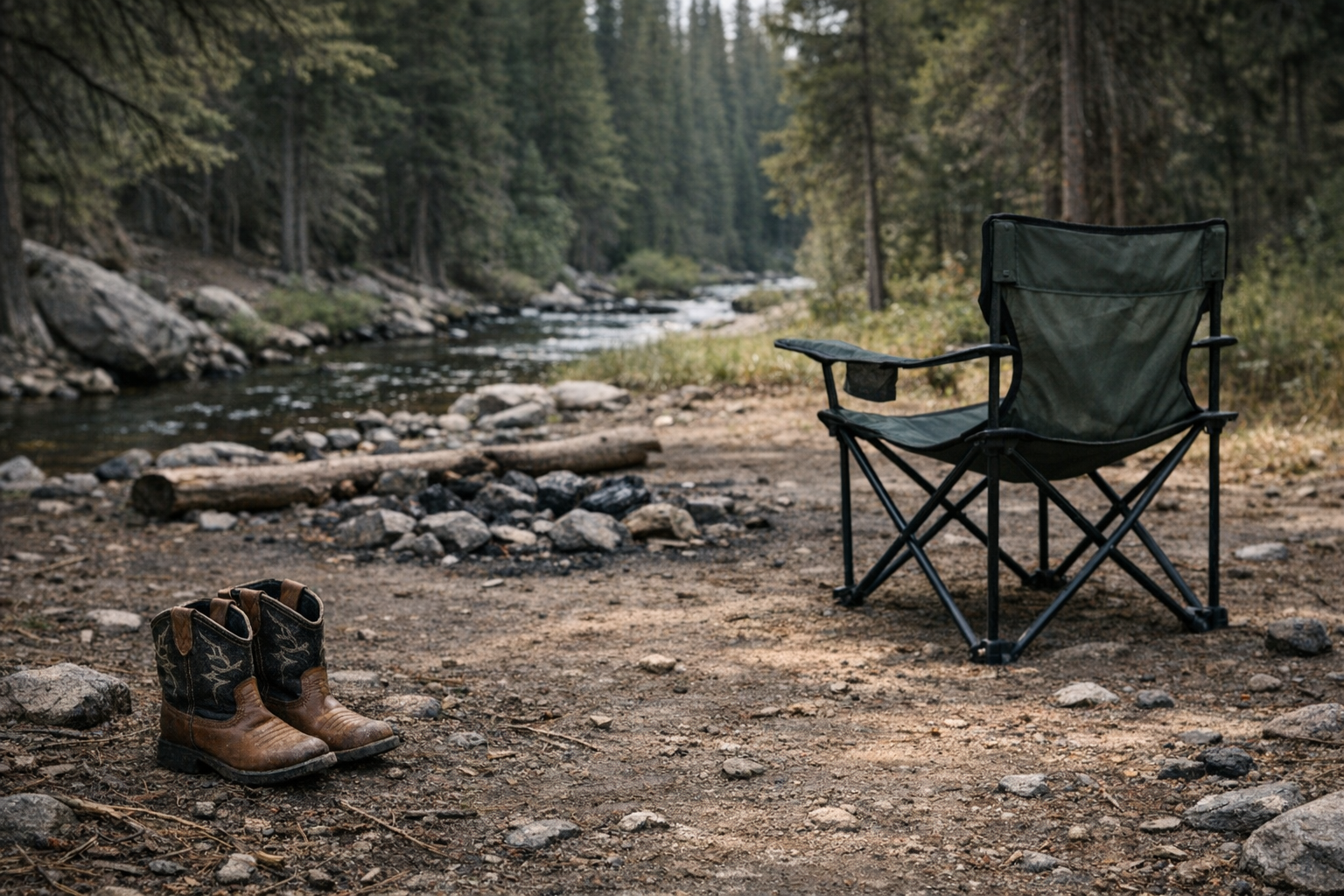
On July 9, 2015, DeOrr’s parents, Jessica Mitchell and Vernal DeOrr Kunz Sr., headed from Idaho Falls toward Timber Creek Campground in Lemhi County, Idaho. With them were DeOrr’s great-grandfather, Robert Walton, and Walton’s friend Isaac Reinwand. It was not supposed to be a dramatic trip. It was a family outing in a remote patch of country near Leadore — rough terrain, mountain air, a creek, a campfire, and one restless toddler clomping around in cowboy boots that were a little too big for him.
That first night passed without any obvious sign that the trip would become one of the state’s most talked-about mysteries. The next morning, people later said DeOrr was around camp during breakfast. Reinwand would recall seeing him. His parents would later say they took him to a nearby store around midday before returning to the campground. So at first glance, the case seems to have a basic shape.
But that shape starts to wobble the moment the group splinters.
At some point that afternoon, the adults were no longer all doing the same thing. Mitchell and Kunz said they left DeOrr in Walton’s care while they went off briefly. Walton’s account did not cleanly support that. Reinwand said he was down by the creek fishing. Then, within a painfully short span of time, everyone was looking at everyone else — and the child at the center of the trip was gone.
The Campground Timeline That Still Divides the Case
Everything about the DeOrr Kunz Jr. disappearance comes back to timing.
If DeOrr was last seen near the adults, then when exactly was that? If he drifted toward the creek, who saw it happen? If he was supposedly left with his great-grandfather, did Walton understand he was responsible for watching him? And if nobody had eyes on him for only a few minutes, how did a toddler vanish so completely that one of the largest search efforts in the area turned up nothing?
That is where the case becomes so unsettling. This is not one of those disappearances where the final timeline is broad and blurry from the beginning. It is narrow. It is local. It should be manageable. Yet the more closely people examine those minutes, the more slippery they become.
Mitchell called 911 after the family searched. Reporting based on the released call places it at 2:28 p.m.
Mitchell said his blanket, cup and toy monkey remained at camp. That account does not establish whether he wandered away or what happened to him.
Timeline of Events
- July 9, 2015: DeOrr Kunz Jr., his parents, great-grandfather Robert Walton, and Isaac Reinwand travel to Timber Creek Campground near Leadore, Idaho.
- That night: The group settles in at camp and spends the night in separate sleeping arrangements nearby.
- Morning of July 10: DeOrr is reportedly seen around camp during breakfast.
- Midday: His parents later say they took him to a nearby store and returned to the campground.
- Early afternoon: The adults split up. Mitchell and Kunz say DeOrr was left with Walton while they briefly walked away. Reinwand says he was by the creek fishing.
- Shortly after: DeOrr is discovered missing, and the adults search the immediate area.
- Mid-afternoon: 911 is called from the campground area after the family cannot find him.
- Next 48 hours: Search teams, divers, K9 units, volunteers, horses, ATVs, and helicopters scour the area.
- Following months and years: Public theories explode, private investigators enter and exit the case, and law enforcement repeatedly circles back to one problem: the timeline and witness accounts do not fully match.
What Doesn’t Add Up
- No stable last sighting: The case lacks one clean, universally accepted final sighting of DeOrr at the campground.
- Conflicting adult accounts: The adults present have not always described the same sequence of events in the same way.
- Difficult terrain: The remote campground and surrounding country complicated the search.
- No meaningful physical trace: Massive search efforts produced no confirmed sign of DeOrr nearby.
- Comfort items: His mother reported they remained at camp; their significance is uncertain.
- Years of scrutiny, no resolution: Despite repeated searches, media attention, and private investigators pushing different theories, the central timeline remains fractured.
Those contradictions are why this case still feels unsettled even after so much attention. People naturally want to turn it into a simple choice: accident, abduction, animal attack, or family involvement. But the reason the case has stayed alive for so long is that none of those explanations sits comfortably on top of the known timeline without leaving hard gaps underneath.
The Search That Should Have Found Something
Searchers worked on foot, with dogs, aircraft and other equipment. Extensive efforts found no confirmed answer.
But nothing solid appeared.
No clothing. No remains. No item that could place DeOrr clearly outside the campsite after he disappeared. No answer from the creek. No answer from the brush. No answer from the surrounding terrain. Over time, bones and possible evidence would be checked, only to turn out to be unrelated or animal remains. The search was not small, lazy, or symbolic. It was real. And that makes the silence around the physical evidence even louder.
Failed searches cannot, by themselves, distinguish accident, abduction or foul play.
Why the Contradictions Matter More Than Any Single Theory
This is where the DeOrr case separates itself from a lot of other missing-child stories. In some disappearances, the most haunting mystery is what happened after the child was last seen. Here, one of the deepest problems is whether the final timeline was ever accurately described in the first place.
In 2016, Sheriff Lynn Bowerman publicly questioned the adults’ accounts and named the parents as suspects. They denied knowing what happened; no one has been charged.
That is why years of scrutiny have not quieted this case. Each time someone tries to lock onto one theory, the same fractures reopen:
- Why do the stories about supervision seem so unstable?
- Who actually had eyes on DeOrr last?
- Why does such a small window of time feel impossible to reconstruct?
- If the campground is the true scene, why is there so little evidence?
- If the campground is not the whole truth, where did the real timeline begin to break?
Those are not fringe questions. They are the spine of the case.
?? Related Investigation:
If this case pulled you deeper into the mystery, continue into:
🔎 Related Investigation:
If this case pulled you deeper into the mystery, continue into:
Theories People Still Debate
Accidental wandering or drowning: This possibility has not been established.
Animal attack: This possibility has not been established.
Abduction: This possibility has not been established.
Foul play involving someone already there: This theory has remained alive because of the contradictory statements, the unstable timeline, and later investigative suspicion directed toward those closest to the case. It is also the bleakest explanation, which is partly why the case continues to divide people.
No cause has been established. Investigative suspicion is not proof of guilt. DeOrr remains listed as missing by the National Center for Missing & Exploited Children.
A Case That Never Stopped Feeling Off
There are missing-person cases that stay alive because of one eerie image, one camera clip, one roadside clue. DeOrr Kunz Jr.’s case survives for a different reason. It survives because the story seems to collapse under its own final minutes.
A child remains missing. Reports, searches and years of investigation have not established what happened.
That is why the disappearance of DeOrr Kunz Jr. still divides people. Not because the case lacks attention, but because attention has only exposed how weak the final timeline still is. For all the searches, interviews, and years of public scrutiny, this story has never moved beyond the same terrifying possibility: that the truth was close enough to touch in those first minutes, and somehow it still slipped away.
?? Related Investigation:
- Disappearances Caught on Surveillance Footage: 9 Cases Where the Camera Recorded the Last Known Moment
- Unsolved Disappearances Where the Last Phone Call Still Doesn’t Make Sense
Research Sources
The following resources were consulted to verify and update this article.
- KIVI / East Idaho News — Ten years after he vanished, the question remains: Where is DeOrr Kunz Jr.?
Reports the camping accounts, recorded emergency call, searches and uncharged investigation. - The Charley Project — DeOrr Jay Kunz Jr.
Summarizes the missing-child record, family accounts and unresolved circumstances. - National Center for Missing & Exploited Children — Deorr J Kunz: Missing Child
Maintains the missing-child appeal and identifying details. - East Idaho News — DeOrr Kunz vanished 5 years ago today. Here’s where the investigation stands.
Distinguishes investigative suspicion from charges and records the adults’ denials.
?? If this story stayed with you, the author suggests these real cases next:
- The school-day disappearance of Kyron Horman that still has no ending
- Why Asha Degree walking into the night still haunts investigators
- The playground timeline in the Dulce Alavez case that still won’t close
Explore more Disappearances stories here: