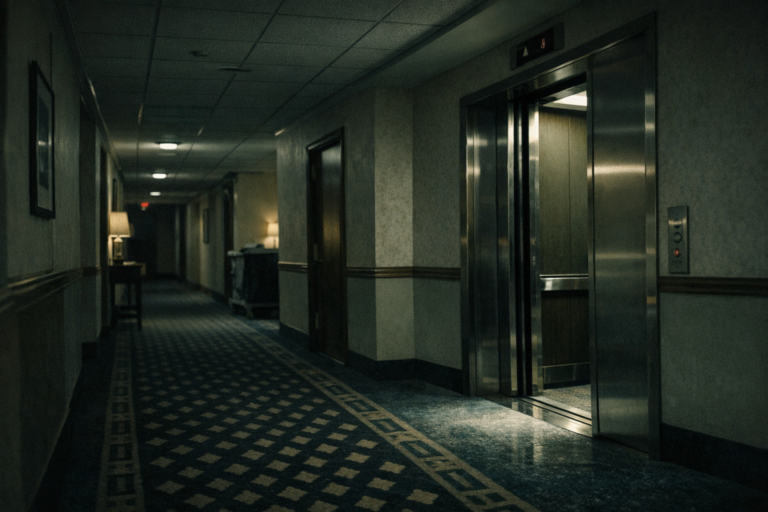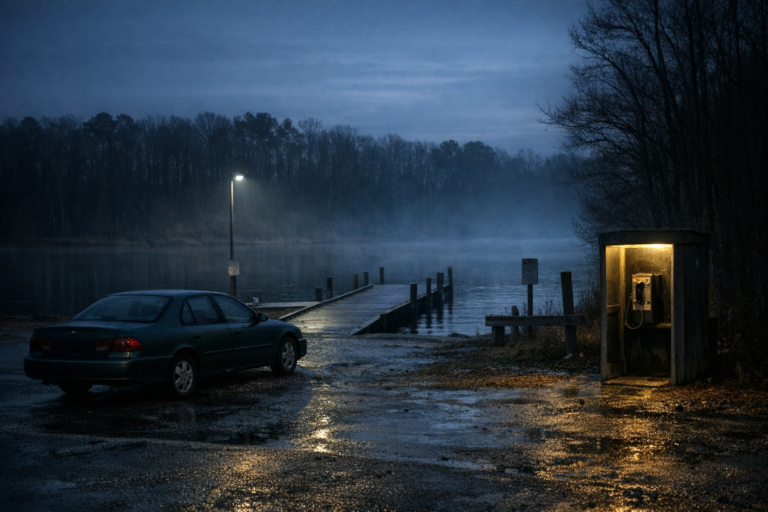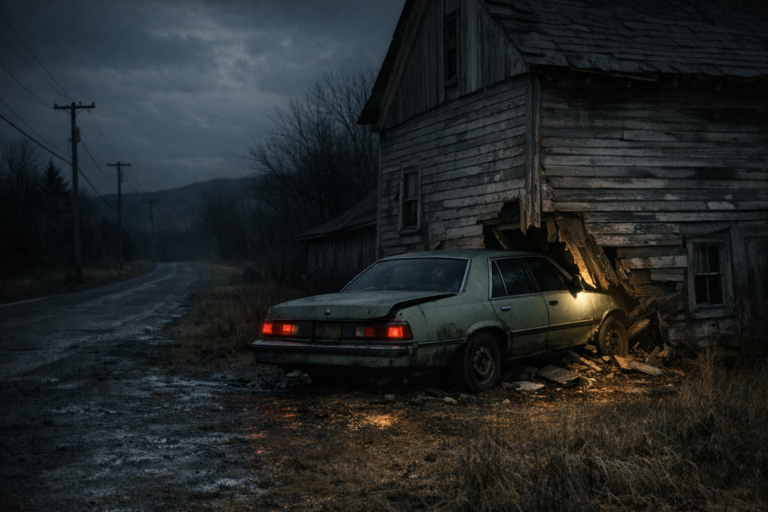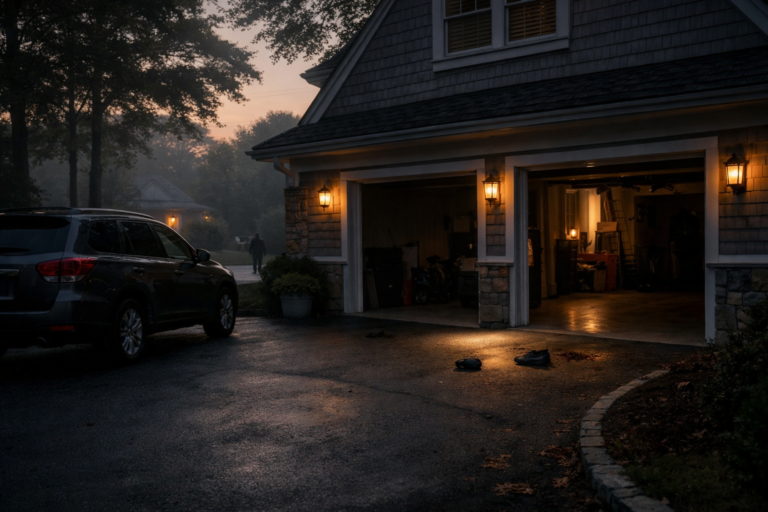
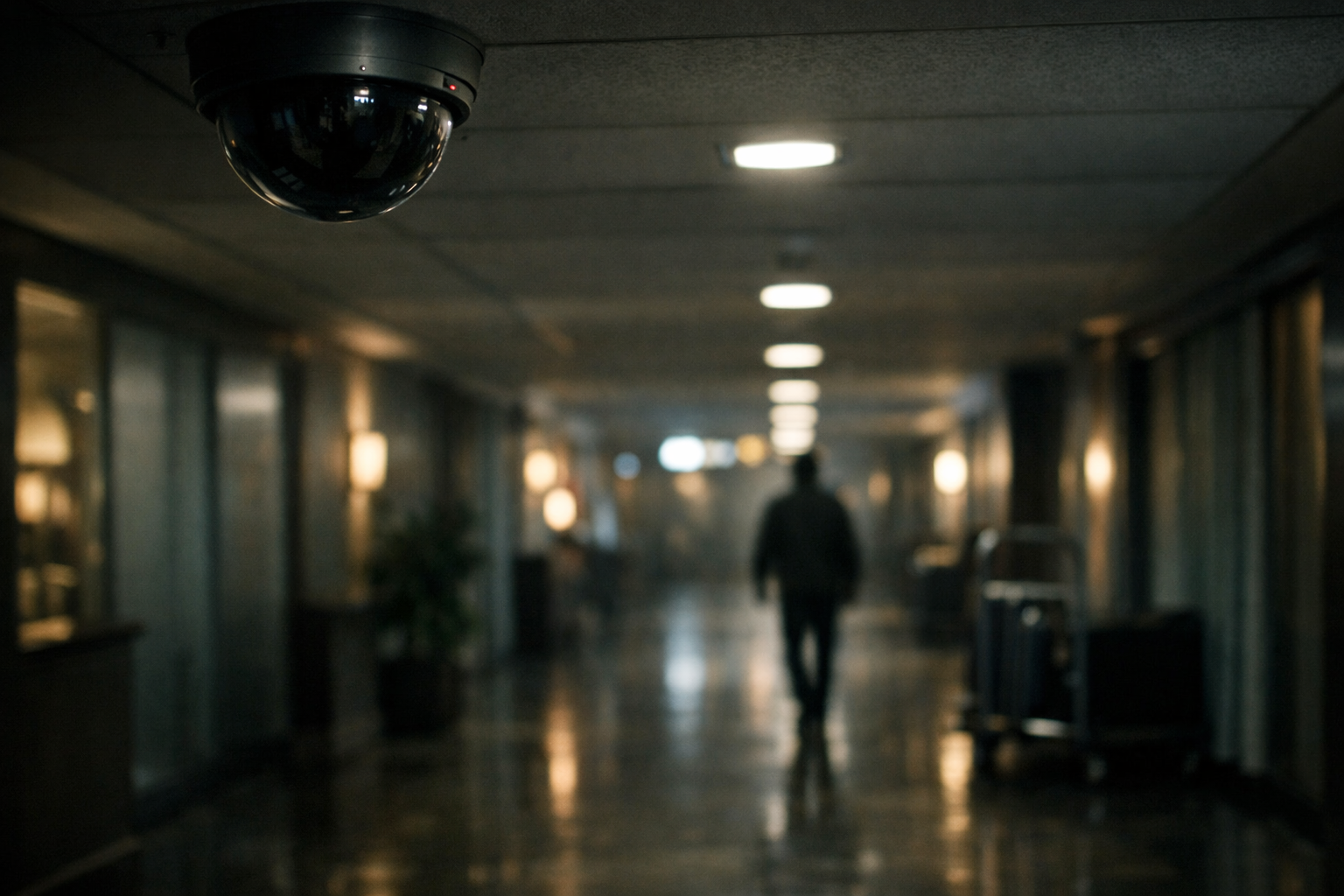
Cameras are supposed to rescue the truth from chaos. They freeze a hallway, a station entrance, a ship corridor, an airport terminal, a condo parking lot, a public path. They turn panic into sequence. But some disappearance cases prove the opposite. The final footage does not solve the mystery. It preserves the exact moment the mystery becomes harder to live with. Someone is still visible. The world around them is still recognizable. And yet the answer slips beyond the edge of what anyone can prove.
That is what gives camera-shaped disappearances their special force. Ordinary unsolved cases can feel swallowed by darkness. These cases feel one frame short of closure. Viewers are not merely reading about absence. They are replaying presence. They are watching a final known movement, an arrival, a corridor, a vehicle drop, a controlled environment, or a visible stretch of public life that should have held onto the truth more tightly than it did.
This page examines five disappearances and one disputed death through footage and other surviving records. Not every case has a public CCTV record of the decisive event. Some involve actual CCTV clips. Others involve shipboard recordings, transit images, public-space visibility, or tightly structured settings where the case feels as though it should still be recoverable from what was seen.
It also matters for authority. When these stories are grouped together, a pattern emerges: cameras preserve motion but not motive; monitored spaces create expectation without closure; and visible last moments often become the reason a case survives in public memory for years. This is not just a roundup. It is a structured archive page about why the visual record so often fails in the exact place readers expect it to help most.
The Final Visible Moments That Refused to Become Answers
Jennifer Kesse
Jennifer Kesse was reported missing on January 24, 2006, after she failed to arrive at work. Her car later turned up elsewhere, and the surveillance footage that followed became one of the cruelest visual almost-breakthroughs in the entire disappearance genre. A person was recorded walking away from the car. The angle, the timing, the environment — all of it suggested the case had finally been pinned to something solid. Then the camera failed in exactly the one way that mattered most.
Jennifer’s case fits the documentary angle here because the footage did not simply capture movement. It captured the feeling that the truth was standing one frame away. The FBI identifies the recorded individual as a person of interest; the footage does not establish what happened to Jennifer.
The key mystery point is that the video should have delivered the face, the break, the naming moment. Instead it became a permanent emblem of how surveillance can preserve sequence while withholding the decisive human detail.
There is another reason these cases remain so replayable. Visual evidence changes the reader’s role. Instead of absorbing a finished narrative, the reader becomes a watcher — comparing timestamps, imagining the next corridor, asking what happened outside frame, and feeling the frustration of proximity without resolution. That makes camera-shaped disappearances unusually powerful inside a documentary archive because they invite active re-investigation every time someone returns to them.
That is also why this case strengthens the site’s broader disappearance authority. Stories like this connect naturally to final-hours archives, witness-sighting mysteries, controlled-environment vanishings, and evidence-pressure hubs because they all orbit the same core contradiction: something visible survived, but explanation did not.
Read the full case here: Jennifer Kesse: The Unresolved Disappearance and Car Footage.
Mekayla Bali
Mekayla Bali’s disappearance feels haunting because so much of her final day seems almost recoverable. Public movement, surveillance-adjacent records, remembered sightings, and an unusually traceable run of ordinary locations all give the case the shape of something that should have closed more tightly than it did. Her last known movements remain one of those timelines readers cannot leave alone because it feels like the answer ought to be sitting just beyond the visible route.
She belongs in this hub because “caught on camera” cases are not always built around a single iconic clip. Sometimes the haunting effect comes from a visible day — a monitored path, a sequence of public spaces, and a trail that feels documented enough to stabilize meaning but never fully does.
The key mystery point is that a disappearance with so many visible moments should feel smaller over time. Mekayla’s case did the opposite. Every remembered movement made the unanswered stretch feel sharper.
There is another reason these cases remain so replayable. Visual evidence changes the reader’s role. Instead of absorbing a finished narrative, the reader becomes a watcher — comparing timestamps, imagining the next corridor, asking what happened outside frame, and feeling the frustration of proximity without resolution. That makes camera-shaped disappearances unusually powerful inside a documentary archive because they invite active re-investigation every time someone returns to them.
That is also why this case strengthens the site’s broader disappearance authority. Stories like this connect naturally to final-hours archives, witness-sighting mysteries, controlled-environment vanishings, and evidence-pressure hubs because they all orbit the same core contradiction: something visible survived, but explanation did not.
Read the full case here: What Happened to Mekayla Bali? The Disappearance Timeline and Sightings That Still Don’t Make Sense.
Rebecca Coriam
Rebecca Coriam vanished from the Disney Wonder in one of the most unsettling controlled-environment disappearances on the site. Cruise ships create the same emotional expectation as surveillance footage: someone should know who moved where, when, and why. Her final recorded moments only intensified that expectation. Instead of closing the space around the truth, the monitored environment widened the impossible feeling at the center of the case.
Bahamian police reported collecting and analyzing CCTV, alongside searches and interviews. Their 2011 statement said no evidence of foul play had been found; it did not establish a complete visual record of her movements.
The key mystery point is that a disappearance inside such a structured setting should have produced a cleaner ending. The fact that it did not is what keeps the case so unnerving.
There is another reason these cases remain so replayable. Visual evidence changes the reader’s role. Instead of absorbing a finished narrative, the reader becomes a watcher — comparing timestamps, imagining the next corridor, asking what happened outside frame, and feeling the frustration of proximity without resolution. That makes camera-shaped disappearances unusually powerful inside a documentary archive because they invite active re-investigation every time someone returns to them.
That is also why this case strengthens the site’s broader disappearance authority. Stories like this connect naturally to final-hours archives, witness-sighting mysteries, controlled-environment vanishings, and evidence-pressure hubs because they all orbit the same core contradiction: something visible survived, but explanation did not.
Read the full case here: Rebecca Coriam Disappearance — The Cruise Ship Mystery Captured on Camera.
Lars Mittank
Few airport disappearances hit people as hard as Lars Mittank’s because the final footage feels so immediate. He is not an abstract last-seen figure reconstructed from rumor years later. He is there, in motion, sprinting away from a place built around cameras, checkpoints, and passenger flow. The footage gives the case a pulse. It also gives it a wound.
Lars belongs here because he represents the purest version of this article’s premise: a final visible moment that should have narrowed the truth and instead became the clip everyone returns to in disbelief. Airports are supposed to organize movement. His case turned organized movement into a vanishing point.
The key mystery point is that the footage looks like the beginning of an answer. In practice it became the last clean thing anyone can say for certain.
There is another reason these cases remain so replayable. Visual evidence changes the reader’s role. Instead of absorbing a finished narrative, the reader becomes a watcher — comparing timestamps, imagining the next corridor, asking what happened outside frame, and feeling the frustration of proximity without resolution. That makes camera-shaped disappearances unusually powerful inside a documentary archive because they invite active re-investigation every time someone returns to them.
That is also why this case strengthens the site’s broader disappearance authority. Stories like this connect naturally to final-hours archives, witness-sighting mysteries, controlled-environment vanishings, and evidence-pressure hubs because they all orbit the same core contradiction: something visible survived, but explanation did not.
Read the full case here: What Happened to Lars Mittank? The Tourist Who Ran from the Airport and Vanished.
Andrew Gosden
Andrew Gosden’s disappearance continues to haunt readers because it combines one of the most ordinary modern images with one of the most enduring unknowns. He was seen on camera arriving at King’s Cross. He had bought a one-way ticket; his plans after arrival remain unknown. The route into London exists. The image exists. The city exists. Yet the passage from arrival to disappearance still feels mechanically broken.
Andrew fits this hub because camera evidence here does not solve the case. It hardens the sense that one crucial urban handoff happened just outside the part history managed to keep. He was visible enough to remain emotionally present and invisible enough to vanish into speculation.
The key mystery point is why an arrival so clearly documented still failed to produce the kind of onward certainty people instinctively expect from a major transit hub.
There is another reason these cases remain so replayable. Visual evidence changes the reader’s role. Instead of absorbing a finished narrative, the reader becomes a watcher — comparing timestamps, imagining the next corridor, asking what happened outside frame, and feeling the frustration of proximity without resolution. That makes camera-shaped disappearances unusually powerful inside a documentary archive because they invite active re-investigation every time someone returns to them.
That is also why this case strengthens the site’s broader disappearance authority. Stories like this connect naturally to final-hours archives, witness-sighting mysteries, controlled-environment vanishings, and evidence-pressure hubs because they all orbit the same core contradiction: something visible survived, but explanation did not.
Read the full case here: Andrew Gosden Disappearance — The Teen Who Took a One-Way Ticket to London.
Tiffany Valiante
Tiffany Valiante died after being struck by a train in July 2015. Her death was officially ruled suicide; her family disputes that finding. This is a disputed-death comparison, not an ongoing missing-person case or a public final-footage case. The route, the reported movement, the physical evidence, and the public effort to understand what happened all create the same camera-era pressure found in stronger CCTV cases: the feeling that the truth should be reconstructable from what survived.
This is not only a story about whether something was seen. It is about the emotional cruelty of evidence that seems close enough to decode and still leaves people fighting over what it actually proves.
The key mystery point is that the surviving trail does not calm the case. It keeps reopening it.
There is another reason these cases remain so replayable. Visual evidence changes the reader’s role. Instead of absorbing a finished narrative, the reader becomes a watcher — comparing timestamps, imagining the next corridor, asking what happened outside frame, and feeling the frustration of proximity without resolution. That makes camera-shaped disappearances unusually powerful inside a documentary archive because they invite active re-investigation every time someone returns to them.
That is also why this case strengthens the site’s broader disappearance authority. Stories like this connect naturally to final-hours archives, witness-sighting mysteries, controlled-environment vanishings, and evidence-pressure hubs because they all orbit the same core contradiction: something visible survived, but explanation did not.
Read the full case here: What Happened to Tiffany Valiante? The Evidence Trail That Still Doesn’t Add Up.
🔎 Related Investigation:
If this case pulled you deeper into the mystery, continue into:
Why These Disappearances Still Don’t Make Sense
What these cases have in common is not one suspect profile, one geography, or one ending. What they share is a final visible structure that should have narrowed the uncertainty: a camera angle, a transit image, a public route, a monitored ship, a parking-lot recording, a tightly reconstructed day. In each case, the visual trail remains emotionally powerful because it looks close enough to truth to be useful and incomplete enough to be maddening.
That is the deeper cruelty of footage-driven disappearances. Cameras create confidence. People assume that if a person was seen, the next answer must exist somewhere nearby: another frame, another exit, another witness, another timestamp. But footage is never total. It captures a corridor, not the entire human event. It preserves one angle, not all context. It can show motion while concealing pressure, intent, threat, confusion, or whatever happened the moment the person moved beyond the recorded edge.
There is also a reason these cases are so strong for internal architecture. A reader who enters through Jennifer Kesse often wants Lars Mittank next. Someone trapped by Rebecca Coriam’s controlled shipboard environment naturally understands the dread inside Andrew Gosden’s station arrival or Mekayla Bali’s visible day without visible resolution.
Modern readers trust visual evidence almost by instinct. That is why these cases linger. A final clip, a public-space image, or a monitored route feels objective even when it is not sufficient. When the record survives but the explanation does not, people do not experience the case as merely unsolved. They experience it as unresolved in a way that feels almost offensive to common sense. The camera showed us something. Why was that still not enough?
That question is what keeps these disappearances alive. The footage does not close the story. It freezes the wound open.
Conclusion
Some disappearance stories haunt people because there was no clue at all. The cases in this collection involve different kinds of surviving evidence. There was something to see: an airport sprint, a station arrival, a monitored ship, a suspect on camera, a visible last route, a surviving evidence trail that should have narrowed the truth instead of multiplying the uncertainty.
These cases show why a partial record cannot answer every question. The visual record gives the public a last point of contact strong enough to replay and incomplete enough to torment. It offers sequence without closure and presence without explanation.
Together, the cases reveal a limitation of partial evidence. Being seen is not the same as being secured into understanding. In some of the site’s most haunting disappearance files, the final visible moment did not solve the story at all. It simply made the story impossible to forget.
Research Sources
The following resources were consulted to verify and update this article.
- FBI — Jennifer Joyce Kesse
Surveillance person of interest and the missing-person investigation. - Saskatchewan Crime Stoppers / RCMP — Missing: Mekayla Bali
Reconstructs movements using surveillance and witness statements. - Royal Bahamas Police Force — Missing Person Rebecca Coriam: News Release425-2011
Official account of searches and collection of shipboard CCTV. - Crime+Investigation UK — Vanished on a lads’ holiday: The disappearance of Lars Mittank
Documents airport footage and the last known movements. - ITV News — Missing Andrew Gosden’s dad: We miss him all the time
Confirms the London ticket, station CCTV and continuing inquiry. - NJ TRANSIT — February 8, 2023 Board Meeting Minutes
Records the official suicide determination and the family-backed reviewer’s challenge to it.
🔎 If this story stayed with you, the author suggests these deeper investigations next:
- Last-sighting cases where one camera, witness, or clue changed the whole mystery
- Disappearances where the final timeline still refuses to close cleanly
- The broader disappearance archive built around timelines, sightings, surveillance, and vehicles
Explore more Disappearances stories here: