Roxanne Sharp Cold Case — How a Podcast Helped Lead to Arrests 44 Years Later
10 min readApril 26, 2026
The Roxanne Sharp cold case centers on the 1982 rape and murder of a 16-year-old girl in Covington, Louisiana, and the stunning arrests announced more than four decades later. The story has drawn national attention because investigators say a local podcast helped generate new witnesses and leads that pushed the case forward.
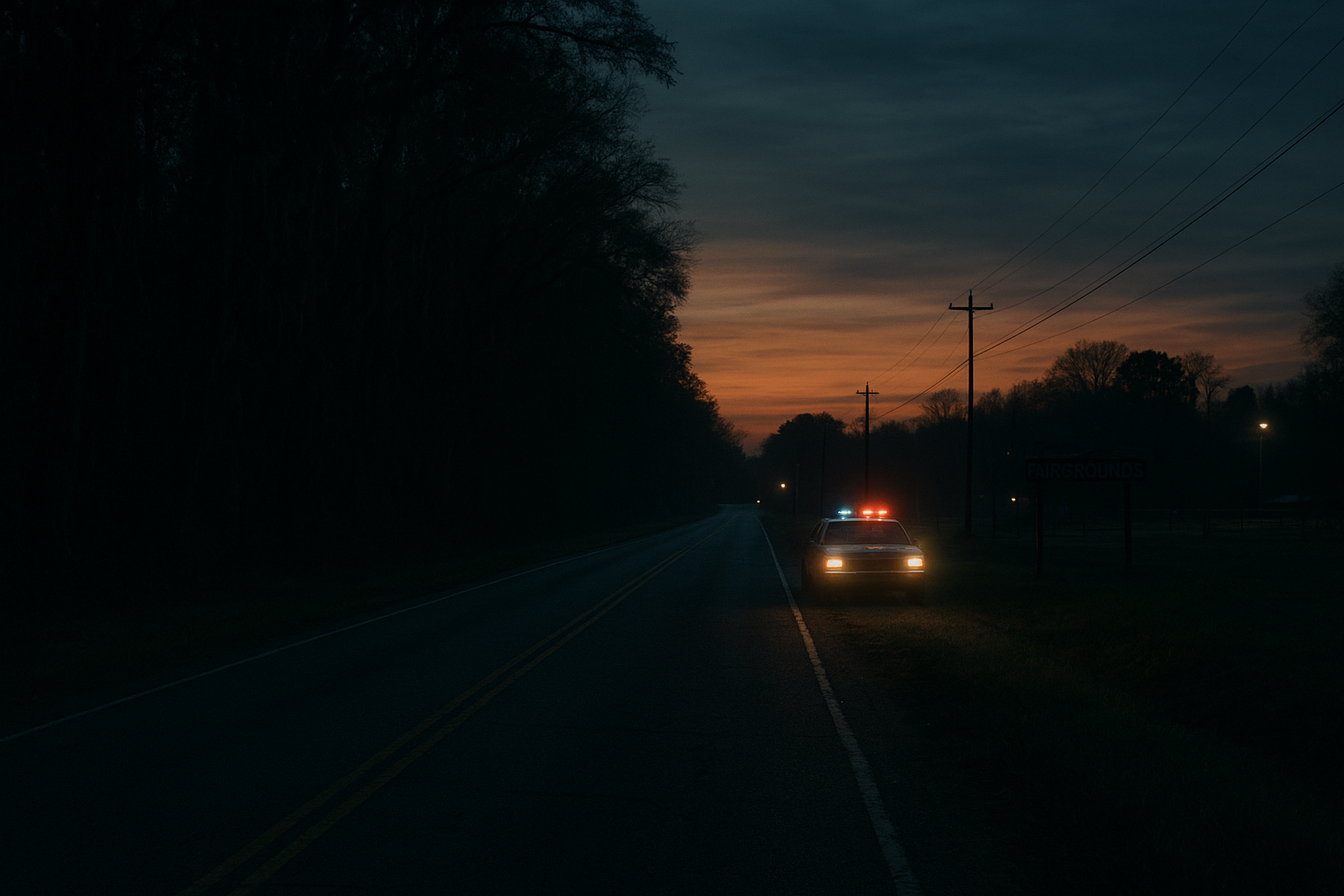
In February 1982, winter sat lightly over Covington, Louisiana, the way it often does in that part of the state. The air could still bite at dawn, but the town itself moved with the familiar rhythm of a place where people knew each other, knew the roads, knew the fairgrounds, knew which conversations belonged in public and which ones stayed behind closed doors. It was the kind of community where news traveled fast, but fear traveled even faster.
Then a 16-year-old girl named Roxanne Sharp was found dead in a wooded area near the St. Tammany Parish fairgrounds.
That single discovery changed the shape of the town. The victim was young. Too young. Investigators said she had been raped and murdered, and the brutality of it landed with the kind of force that does not fade when the newspaper gets old. People remembered where the body was found. They remembered the shock. They remembered the feeling that something evil had stepped out from the shadows and touched a place that had once felt ordinary.
And then, as often happens in cases like this, the years began stacking up.
At first there was urgency. Police worked the scene, gathered what evidence they could, and chased leads in a world that was far less forgiving to cold cases than the one we live in now. In 1982 there was no social media swarm, no nationwide online database at a detective’s fingertips, no forensic genealogy revolution ready to drag old secrets into daylight. If people stayed quiet, if evidence was thin, if fear settled over witnesses early, a murder could harden into an old wound before anyone was ready to admit it.
That seems to be what happened in Roxanne Sharp’s case. Public cooperation was limited. Evidence was limited. And somewhere in that silence, the investigation slowed, then stalled, then turned into the kind of file detectives inherit more than solve.
But the strange thing about old murders is that they do not really stay in the past. They keep living in fragments. A family still waits. A detective remembers a photograph. Somebody in town hears the victim’s name and lowers their voice. Somebody else remembers a detail they never shared. The years pass, but the story does not end. It just goes quiet.
Roxanne’s story went quiet for a very long time.
For decades, all the usual cold-case ingredients remained in place: grief without closure, rumors without certainty, and the heavy suspicion that someone out there knew more than they had ever said. At one point the case even drifted toward one of true crime’s most misleading shadows. Serial killer Henry Lee Lucas, famous for claiming murders he did not commit, was once linked to the case by confession. For a while that must have looked like movement. For a while it must have seemed possible that this was the answer. But Lucas was notorious for false confessions, and in time his claim collapsed. The case slid back into darkness.
That twist matters, because false hope can be almost as cruel as no hope at all. It gives a family something to reach for, then yanks it away. It lets a community think the monster has been named, only to discover the real story is still missing.
Meanwhile, Covington kept going. Children grew up. Streets changed. Businesses came and went. People who had been young in 1982 became middle-aged, then old. Some of the officers who first knew the case were replaced by others who knew it only as a legacy file. Yet the murder itself remained like a stain beneath the paint, something that could be covered but never fully erased.
One local resident later described it as a black cloud hanging over the community. That feels exactly right. Not a storm that crashes and passes. A cloud that just stays there, dimming everything below it.
By 2023, Louisiana State Police investigators in the Covington Field Office took over the case and started again with the kind of patience cold-case work requires. They reviewed the original file. They re-interviewed witnesses and possible suspects. They collected new material where they could. Most important, they resubmitted evidence for DNA analysis using technology that had not existed when Roxanne died.
That alone would have made this case worth watching. Across the country, old murders are being reopened because science can now do what earlier investigators could only hope for. Tiny samples matter more. Preservation matters more. Old assumptions get tested instead of inherited. Cases once dismissed as impossible are now being treated as unfinished.
But Roxanne Sharp’s case did not move on technology alone.
It moved because somebody tried something that still would have sounded strange to many people a few years ago. Investigators and local media worked together on a podcast.
The series was called Who Killed Roxanne Sharp? and at first glance the idea sounds almost unbelievable. A true-crime podcast helping solve an actual murder? That sounds like the kind of phrase built to travel online. But in this case, police say it mattered. It renewed public attention. It put Roxanne’s name back into homes and car speakers. It reminded old witnesses that the case was not buried. It created a place for tips to come in. Most of all, it seems to have loosened the grip of the silence that had protected the case for so long.
That may be the most haunting part of the whole story. Not just that the murder remained unsolved for decades, but that fear may have helped keep it that way. At a press conference after the arrests, investigators said earlier efforts had been undermined by a culture of fear among people connected to the case. That phrase tells you almost everything. Culture of fear. It suggests people knew this murder did not happen in a vacuum. It suggests names may have circulated privately even when nobody was willing to say them out loud. It suggests the town had been living beside the answer, or part of it, for years.
The podcast changed that equation.
Listeners heard Roxanne’s story. They heard the old case laid out again. They heard investigators asking, in effect, if you know something, now is the time. And according to police, people finally came forward. New witnesses spoke. New tips were generated. The timeline around Roxanne’s final days became clearer. The distance between the girl she had been and the place where she was found started to shrink.
Then, in April 2026, the case cracked open.
Authorities announced that four men had been charged with aggravated rape and second-degree murder in connection with Roxanne Sharp’s death: Perry Wayne Taylor, Darrell Dean Spell, Carlos Cooper, and Billy Williams Jr. Police said Roxanne had been acquainted with the accused men and was known to spend time in the neighborhood where they lived. Two of the men, Taylor and Cooper, were already incarcerated on unrelated charges when investigators reached them. Williams was arrested in Covington. Spell was arrested in Ohio and awaited extradition back to Louisiana.
Those are only charges, not convictions, and that distinction matters. But even so, the announcement landed like a shockwave. Forty-four years had passed. For most murders, that length of time feels like another world. In practical terms, it is another world. Evidence ages. Memories decay. Witnesses die. Whole lives unfold. Yet here was a case from 1982 suddenly reentering the present tense.
Imagine what that must feel like for a family.
Roxanne’s niece said she hoped justice would finally bring healing and closure not just to the family but to everyone who had carried the case with them. That word closure gets used so often in true crime that it can begin to sound mechanical, but in a case like this it is anything but. Closure does not mean repair. Nothing repairs a murdered 16-year-old girl. Closure means the waiting is no longer endless. It means the dead are no longer trapped in a sentence with no ending.
There is another layer here that makes the story especially compelling right now. True crime has spent years being criticized, and not always unfairly, for turning pain into entertainment. But the Roxanne Sharp case points to a more complicated reality. Sometimes public storytelling is not exploitation. Sometimes it is pressure. Sometimes it is memory. Sometimes it is a way of reaching the one witness who never called because nobody asked the right question at the right time. In this case, police themselves credited the podcast with helping them get information they needed.
That does not make the story less unsettling. If anything, it makes it more unsettling. Because it suggests the solution may not have been buried in some impossible secret at all. It may have been waiting behind ordinary human silence.
When the podcast team retraced the old crime scene, one participant said it became clear Roxanne had likely been grabbed on the street and dragged into the woods. That image is almost unbearable. A teenager taken in a familiar environment, close enough to the world that somebody might have noticed, yet not protected by it. There is something uniquely chilling about violence that happens just a few steps off the edge of normal life. A road. A neighborhood. Trees. Then horror.
And once again, Roxanne’s age sits at the center of the story. Sixteen. Old enough to move through the world with a little freedom, young enough to still be terribly exposed to men, threats, and places she could not possibly measure correctly. That is part of why the case cuts so deep. Roxanne was not a symbol or a headline device. She was a teenager whose life was supposed to still be expanding.
Instead, for decades, her story existed in two broken pieces. There was the girl her family remembered, and there was the victim trapped inside an unsolved file. The arrests do not erase that gap, but they narrow it. They say the file no longer gets to speak louder than the person.
Cold cases are often described as puzzles, but that word can be too tidy. A puzzle is something you work on for satisfaction. This was not that. This was a community carrying a moral debt for 44 years. Every year the case stayed open was another year Roxanne’s family woke up with the same absence. Every year of silence gave the appearance that time might be stronger than justice.
This time, it was not.
What happened next will play out in court, where evidence will be tested and claims will have to hold up under the hardest light the system can produce. But even before any trial, the story already says something larger about modern true crime and modern investigations. Old murders can still move. Old witnesses can still speak. New technology matters, but so does old-fashioned persistence. And sometimes the thing that breaks a decades-long case is not one dramatic clue. It is a community finally deciding not to stay afraid anymore.
That may be the real reason this case has spread so fast beyond Louisiana. It is not just a story about a terrible crime. It is a story about time failing to do what killers count on it to do. Time was supposed to blur the edges. It was supposed to weaken memories, thin out evidence, and bury Roxanne Sharp under the weight of other years and other tragedies.
Instead, 44 years later, her name came roaring back into the present.
And with it came the possibility that the black cloud hanging over Covington may finally begin to break.