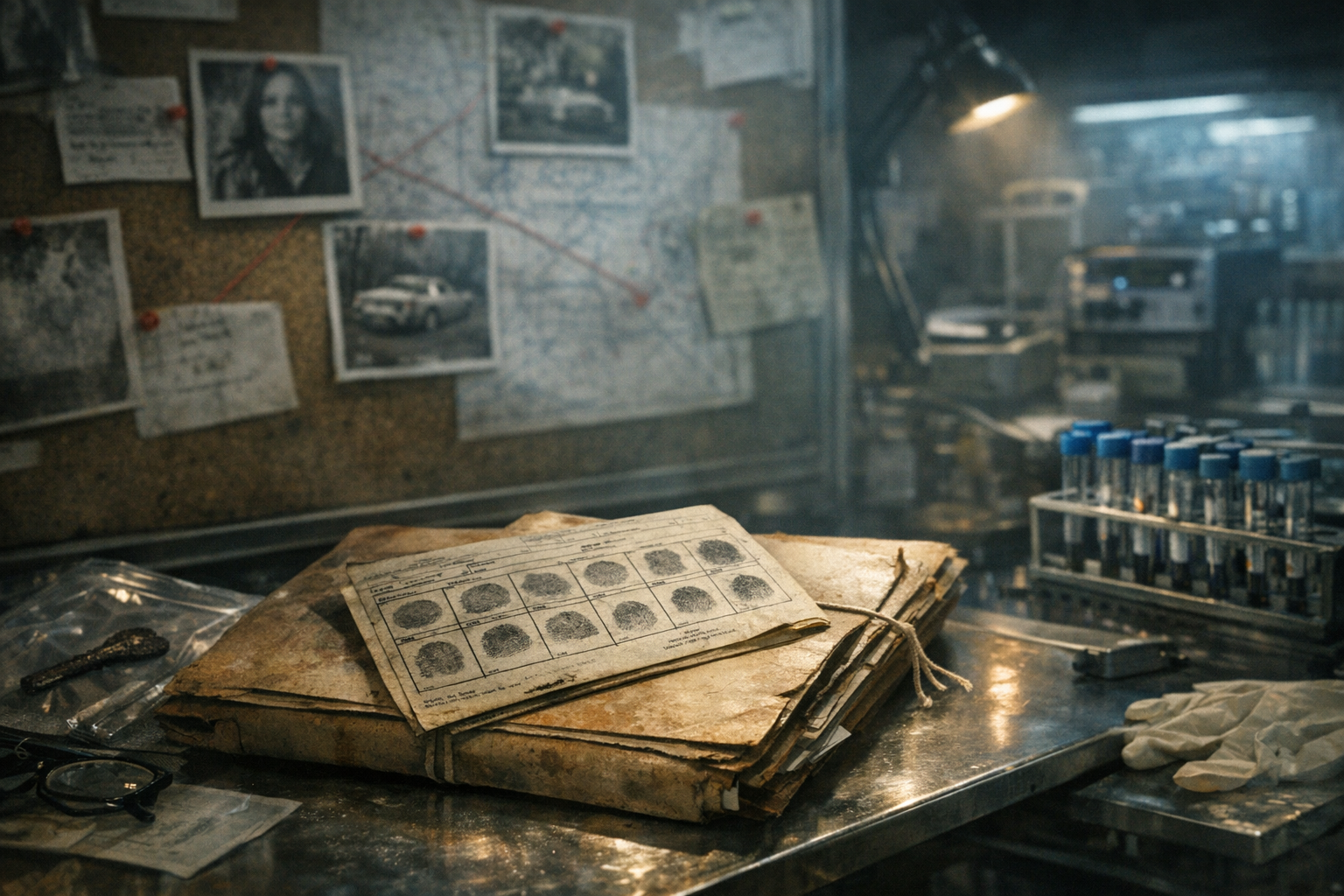
Some disappearance cases do not stay alive because the evidence was overwhelming. They stay alive because the silence becomes part of the story. Years pass. Families age inside the uncertainty. Public memory cools. The file starts to look like one more tragedy that will never move again. Then something breaks it open — a strand of DNA, a genealogy match, a confession, a later police encounter, a preserved clue old investigators could not use yet. Suddenly the cold case is no longer only a story about vanishing. It becomes a story about the moment the silence finally lost.
That is what makes solved-years-later disappearances so compelling. They force readers to confront two timelines at once. The first is the original disappearance: the day someone vanished, the immediate search, the first wave of confusion and fear. The second is the long afterlife of the case: the seasons of waiting, the stalled leads, the false endings, and the eventual break that reorders everything. In documentary terms, these are not just mystery stories with happy endings. They are investigations that prove time itself can be evidence, or at least the space in which evidence survives long enough to matter again.
This collection follows delayed breakthroughs in disappearances and unsolved killings. Its outcomes differ: a survivor returned, remains were identified, a hoax was exposed, and murder investigations led to convictions or a police identification. Those are important answers, but they do not establish every detail of every case.
These cases matter because they show what cold-case authority really looks like. Readers searching for disappearances solved years later are not simply looking for a list of resolved mysteries. They want to understand how resolution finally happened. What changed? Was it science, persistence, luck, human error, or one overlooked clue that only made sense decades later? The answers vary, but the pattern is the same: the trail did not stay active on its own. Something had to reopen it.
The break can change the meaning of the original evidence. A confession, a family-tree lead or a recovered vehicle opens a different kind of door, and each requires its own checks.
Delayed Breakthroughs in Disappearances and Killings
Etan Patz
Etan Patz disappeared in Manhattan in 1979. Pedro Hernandez was convicted of kidnapping and murdering him in 2017 after a case centered on disputed confessions. In June 2026, the U.S. Supreme Court reversed a federal ruling granting Hernandez habeas relief. The judgment concerns legal limits on federal review; it does not erase the dispute over his statements.
Etan belongs here because this is exactly the kind of disappearance that seemed destined to remain symbolic rather than solvable. What changed was not luck alone. It was persistence, reexamination, and the willingness to keep digging into a case everyone already knew by name.
The key mystery point is that for decades the disappearance looked like a permanent national wound. The eventual breakthrough did not erase that history. It proved how long a case can stay cold before one human break in the wall finally moves it.
Read the full case here: Etan Patz Disappearance — The Boy Who Vanished from Prince Street.
🔎 Related Investigation:
The Martin Family
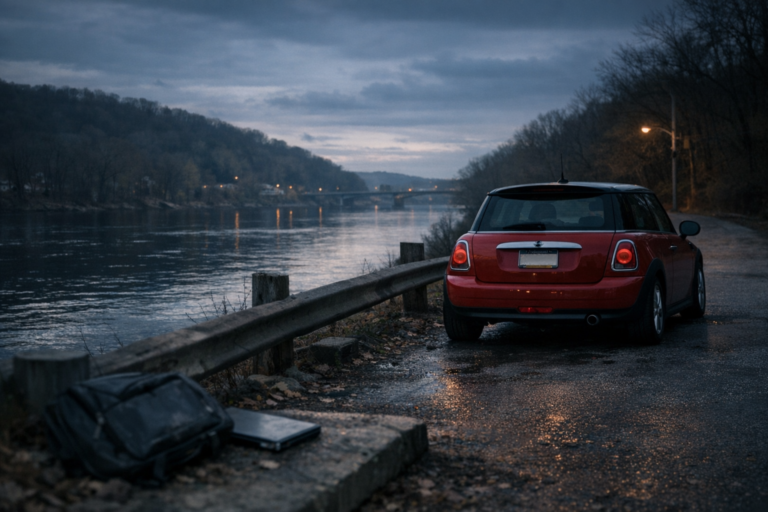
The Martin family vanished during an Oregon outing in 1958. Two daughters’ bodies were recovered in 1959; three relatives remained missing for decades. A vehicle recovered from the Columbia River in 2025 yielded remains identified in April 2026 as Kenneth, Barbara and their daughter Barbie Martin. The identification answers who was found, while the circumstances of the car entering the river remain uncertain.
The recovered car provided the setting for modern identification work. DNA helped confirm the remains, rather than locating the vehicle by itself.
The recovery and identification brought answers to a family disappearance that had lasted generations, without establishing every event on the original journey.
Read the full case here: Martin Family Mystery Solved — How DNA Finally Identified the Oregon Family Lost in the Columbia River.
Jaycee Dugard
Jaycee Dugard disappeared as a child in 1991 and remained missing for 18 years. That time span alone makes the case one of the most unsettling in the cluster, because it forces readers to sit with the fact that a disappearance can move from active emergency to long-term grief while the person at the center is still alive somewhere inside the unanswered years. The eventual break came not because the original disappearance felt newly solvable, but because a later law-enforcement encounter finally exposed what had been hidden in plain sight.
Jaycee belongs in this roundup because the silence broke in a way that changes how people think about cold cases. Sometimes a disappearance is reopened not by one perfect clue from the old file, but by a fresh moment that suddenly connects to the old one and makes all the missing years collapse into view.
The key mystery point is how a case can remain emotionally frozen for nearly two decades and then explode back into clarity once one later contact forces the hidden reality into the open.
Read the full case here: Vanished for 18 Years: The Shocking True Story of Jaycee Dugard..
Sherri Papini
Sherri Papini’s 2016 disappearance was initially presented as an abduction. Investigators later connected DNA to a former boyfriend, who said she had stayed with him. She pleaded guilty to mail fraud and false statements in 2022 and received an eighteen-month prison sentence. The breakthrough exposed a kidnapping hoax.
This fits the documentary angle because the break did not merely answer an old question. It reversed the meaning of the disappearance itself. In a hub about the moment the silence broke, that kind of reversal matters. Sometimes the breakthrough does not tell you what unknown person did. It tells you that the accepted story was the wrong story all along.
The key mystery point is that a disappearance can remain unresolved in the public mind even when the most important thing investigators eventually uncover is that the original frame was deceptive.
Read the full case here: The Vanishing Act: The Shocking Truth Behind Sherri Papini’s Kidnapping.
William Talbott DNA Murder Case
Jay Cook and Tanya Van Cuylenborg disappeared during a 1987 trip to Washington; their bodies were later found in separate counties. A DNA profile led investigators to William Earl Talbott II through genealogy mapping decades later. He was convicted of both murders. In its February 2024 substituted opinion, the Washington Court of Appeals affirmed the convictions while ordering an erroneous firearm enhancement removed.
This case belongs here because it captures the exact modern authority angle behind solved-years-later investigations: a file can go cold, the killer can go undetected, and one biological trace can still survive long enough to upend the ending decades later.
The key mystery point is that the breakthrough did not come from the era of the crime. It came from the future of the investigation — proof that some cases are only waiting for a technology their original detectives never had.
Read the full case here: The Cold Case That Waited Decades for One Strand of DNA: William Talbott DNA Murder Case.
Rita Curran
Rita Curran was murdered in Burlington, Vermont, in 1971; she was not a missing-person case. In 2023, police announced that DNA and genetic genealogy had identified William DeRoos as her killer. He had died in 1986 and was never tried for the crime.
A cigarette butt preserved from the crime scene became the DNA clue that allowed investigators to revisit the killing more than half a century later.
The key mystery point is how many old cases look dead until one surviving detail, handled with patience, suddenly becomes the bridge between the vanished past and the present-day answer.
Read the full case here: Rita Curran — The Murder Solved Half a Century Later.
🔎 Related Investigation:
If this case pulled you deeper into the mystery, continue into:
Why These Disappearances Still Matter After the Breakthrough
What these cases have in common is not one method or one kind of suspect. It is the long period during which nothing seemed to move. That matters because cold cases change shape over time. Evidence degrades. Witnesses age. Public attention wanders. Families learn to carry uncertainty in quieter ways. By the time a breakthrough arrives, the answer is doing more than solving the old mystery. It is collapsing years of emotional and investigative distance all at once.
The break itself also matters because it reveals something about the era. In earlier decades, a case might stay open only as long as the original investigators could keep it active. In the modern era, old files can be revived by technologies that did not exist when the disappearance first happened. DNA and genetic genealogy have changed the entire grammar of resolution. Confessions still matter. Reopened witness pressure still matters. But some of the most dramatic solved-years-later stories now come from the collision between preserved evidence and tools from the future.
Readers do not only remember that a case was solved. They remember how the dead silence finally cracked: the family-tree match, the later traffic stop, the old evidence reprocessed, the statement that broke decades of stalemate. Those moments give the archive a stronger thematic spine than a broad “mysteries solved” page ever could.
Comparing these cases requires keeping the outcomes separate. A conviction, a police finding and the identification of remains carry different meanings, even when all emerge from a long investigation.
🔎 Related Investigation:
Conclusion
The cruelest thing about a cold disappearance case is how normal the waiting can start to feel. The file remains open. The answer does not come. The public learns the title of the mystery and gradually stops expecting a final chapter. The cases in this collection matter because they broke that pattern. Each one reached the point where silence felt permanent, and then one break — one preserved clue, one confession, one investigative turn, one new technology — reopened everything.
That is why solved-years-later cases carry such power. They are not only about the missing person or the original crime. They are about endurance: families who kept waiting, investigators who kept pushing, and evidence that outlived the moment that created it. In some stories, the answer arrived through science. In others, through pressure or error or a later event nobody could have predicted. But in all of them, the same lesson holds. A case can go cold without being finished. Sometimes the truth is not gone. Sometimes it is simply waiting for the right break to find its way back.
Research Sources
The following resources were consulted to verify and update this article.
- Supreme Court of the United States — McCarthy v. Hernandez, June 22, 2026
Records the Patz conviction and reversal of federal habeas relief. - Oregon Public Broadcasting — Medical examiner’s office confirms missing family found in Columbia River
Reports DNA identification of Kenneth, Barbara and Barbie Martin. - Jaycee Dugard / Simon & Schuster — A Stolen Life
The survivor’s memoir overview documents eighteen years of captivity and her return. - U.S. Department of Justice — Sherri Papini Sentenced to 18 Months in Prison
Explains the hoax investigation, DNA evidence, guilty plea and sentence. - Washington Court of Appeals via Justia — State v. William Earl Talbott II, No. 80334-4-I
Reviews the genealogy lead, trial evidence and affirmed convictions. - Associated Press — Discarded cigarette butt, DNA tests solve 52-year-old murder
Reports police identification of deceased suspect William DeRoos.
🔎 If this story stayed with you, the author suggests these deeper investigations next:
- Cold cases where DNA and family-tree science finally broke the silence
- Investigations that came roaring back through retrials and new evidence
- Disappearances where the evidence still seems to lean in one direction
Explore more Disappearances stories here: