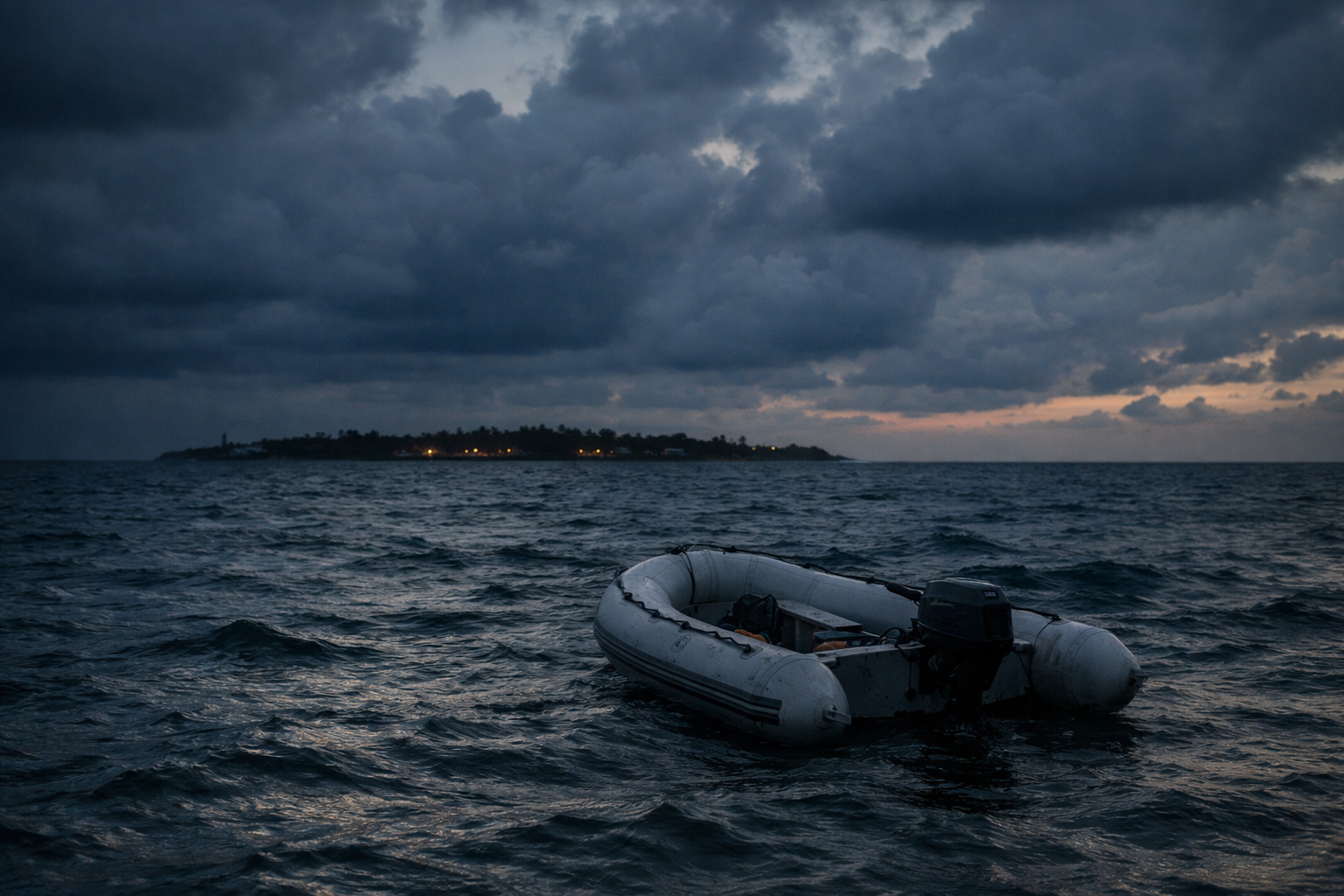
Disappearances at the water’s edge disturb people in a different way because the setting itself refuses to hold still. A road can be mapped. A building can be searched room by room. A city block can be revisited until the smallest contradiction starts to show. But shorelines move. Tide lines erase. Cruise decks empty and refill. Harbors look calm while carrying away the last physical trace. The sea does not simply hide what happened. It keeps changing the scene while everyone is still trying to understand it.
That is part of why these cases linger so hard in public memory. An unresolved disappearance already creates a vacuum that families, investigators, and readers keep trying to fill. When water becomes part of the final setting, that uncertainty deepens. People imagine the last sighting on an open deck, the final walk along a beach, the last swim toward land, the missed return to shore, the aircraft that should have reached the next point on the map and never did. The missing person is gone, but the location stays vivid. You can see it too clearly. That makes the absence feel active.
Some of these stories revolve around cruise-ship corridors and vanished passengers. Some break open on a shoreline where the timeline stops making sense. Some hinge on a last swim, a final crossing, or a body of water that turned a search into an endurance battle against time and geography.
How This Water-Edge Archive Is Organized
This archive is organized by investigative lens rather than by chronology. That matters because water-edge disappearances do not stay with people for one simple reason. Some become obsessions because the final verified movement happened on a ship where hundreds of people should have seen more than they did. Others persist because a beach, island, or harbor created a deceptive sense of openness — a place that looked impossible to vanish from until someone did. Others belong to the strange category of threshold cases, where the missing person was crossing from one certainty into another: from deck to cabin, shore to water, aircraft to destination, tourism into danger, or private fear into public mystery.
You can move through this page the way investigators often move through real case files. Start with cruise-ship vanishings if you keep coming back to controlled environments that somehow failed to control anything. Move into beaches and resort zones if what unsettles you is how a person can disappear from a place full of witnesses, light, and movement. Follow the shore-crossing and open-water cases if the last known moment is tied to a decision — a swim, a route, a dive, a departure. Then step into the wider transportation cases, where planes and long sea routes stretch the final known geography so far that the investigation becomes part map, part void.
Existing hubs inside this cluster still matter here. If a case sends you toward broader timeline reconstruction, surveillance analysis, or the bigger disappearance map, this page is meant to route you there naturally. It sits above those branches, gathering one specific emotional and investigative pattern in one place: cases where the edge of the water became the edge of certainty.
Cruise Ships, Deck Railings, and the Illusion of a Closed World
Cruise-ship disappearances are uniquely unnerving because they happen inside environments that look sealed. There are passenger manifests, crew logs, cameras, schedules, hallways, cabins, keycards, and rails separating people from open water. On paper, that sounds like structure. In practice, structure can turn into theater. Once a person goes missing at sea, every controlled detail becomes a new reason the case should have been easier to solve than it was.
That is why Amy Bradley Disappearance — What Happened to the Woman Who Vanished From a Cruise Ship? remains such a durable gateway case. The setting feels almost too contained to permit a clean vanishing, which is exactly why readers keep circling back to it. A family vacation, a ship between ports, a final stretch of ordinary time — and then a disappearance that transformed deck space, crew procedures, and later sightings into one of the most discussed maritime missing-person stories in the archive.
The same pressure sits inside What Happened to Amy Lynn Bradley? The Cruise Ship Timeline and the Sightings That Still Raise Questions, which keeps the case alive through the sequence itself. Timeline-heavy disappearances become more addictive when the geography feels finite. Readers do not just ask what happened. They ask how there was enough room for uncertainty to survive at all. That is the trap of these shipboard cases: the smaller the world looks, the more every missing minute starts to matter.
Then there is Rebecca Coriam Disappearance — The Cruise Ship Mystery Captured on Camera, where the presence of footage does not calm the story. It sharpens it. Camera evidence in disappearance cases often creates the false promise of closure — the feeling that if the final visible moment exists, the explanation must be close behind. But Rebecca Coriam’s case belongs here precisely because the image record became part of the ache instead of the answer.
Cruise-ship vanishings do not stay powerful because they are simply dramatic. They stay powerful because they expose how quickly systems stop feeling reliable once the water opens beneath them. A ship is supposed to function like a moving city. In these cases, it starts to feel more like a corridor suspended over absence.
Beaches, Resort Zones, and the Public Places That Somehow Went Blank
Some disappearances feel frightening because they happen in isolation. Water-edge resort cases frighten people for the opposite reason. They unfold in places built to be seen. Beaches are open. Resorts are crowded. Vacation zones are full of movement, noise, temporary witnesses, and the illusion that someone must have noticed the crucial moment. When nobody can reconstruct it cleanly, the entire setting starts to feel unstable.
Sudiksha Konanki Disappearance — The Spring Break Mystery That Triggered Global Attention belongs near the center of this archive for exactly that reason. The case pulled immediate international attention because the ingredients seemed so visible: youth, travel, a beach environment, public scrutiny, and a final chain of uncertainty that only widened as more people tried to pin it down. It is not just a modern disappearance story. It is a case study in how fast visibility can fail.
That same public-private tension runs through Taylor Casey Disappearance — The Retreat, the Island Silence, and the Questions Left Behind. Retreat settings promise restoration, structure, and routine. Island settings promise boundaries. When someone vanishes from a place carrying both of those expectations, the case develops a specific emotional charge. The landscape is beautiful. The atmosphere is supposed to be healing. Then the details harden, and the entire environment starts reading like a false reassurance.
Lynette Hooker Disappearance Explained: The Bahamas Search, the Sea, and the Questions That Won’t Go Quiet pushes that feeling even further. The Bahamas setting matters here not because it adds postcard atmosphere, but because it shapes the search logic itself. Cases like this become difficult in layers: tourism, transient witnesses, open shoreline access, movement between public and private spaces, and the nagging suspicion that the final answer may have passed briefly through view and then dissolved into a wider geography.
These are the cases that keep readers locked in because the scene looks so legible at first glance. Beaches, walkways, hotel zones, and island paths do not resemble the wilderness. They resemble exposure. Yet again and again, they produce the same terrible outcome: a last normal moment, then a blank section no amount of public attention can fully repair.
Docks, Harbors, and the Places People Pass Through Without Staying
Between the sealed world of a cruise ship and the broad openness of a beach sits another kind of disappearance setting: the transit edge. Docks, marinas, ferry points, harbor walkways, and shoreline access zones are built for movement, not permanence. People arrive, wait briefly, look outward, turn back, or continue on. That makes them strangely vulnerable settings in disappearance cases. They are public enough to imply witnesses and transitional enough to let crucial details dissolve into background motion.
Cases connected to ships and coastal travel often keep drawing readers back because this in-between geography creates a different kind of uncertainty. A person can be near safety, near departure, near a return route, near other people — and still fall into a gap no one can reconstruct cleanly. That tension echoes through the Bradley and Coriam files, where maritime infrastructure and passenger movement never produced the level of certainty people expected. The more procedural the setting feels, the more disturbing the unanswered space becomes.
It also helps explain why shoreline disappearances are rarely solved by atmosphere alone. Harbors and dock areas look navigable. They suggest order: entry points, boarding areas, schedules, crew zones, railings, lighting, and security routines. But once a case breaks open, those same features can create false confidence. Investigators and readers alike start with the assumption that this kind of place should leave a cleaner record than open wilderness. When it does not, the missing sequence feels sharper rather than softer.
This is one of the strongest reasons water-edge cases generate binge reading. They keep exposing how often a disappearance happens not in total isolation, but in a place designed for passage. A dock is a threshold. A harbor is a handoff point. A marina is a place where people are supposed to come and go in visible ways. When someone vanishes in that atmosphere, the setting itself starts to feel like unfinished evidence — not empty, but incomplete.
Last Swims, Shore Crossings, and the Decisions That Changed Everything
There is another branch of water-edge disappearances where the key tension is not crowd visibility or ship containment, but a single decision made at the edge of land. A person enters the water, heads toward shore, approaches an underwater space, or attempts a crossing that should have had a clear outcome. Instead, the moment becomes a split in the record. After that, every version of the story depends on inference.
What Happened to Michael Rockefeller? The Final Swim Toward Shore That Ended in Mystery belongs here because the case is structured around exactly that threshold. The final movement is simple enough to describe and impossible to stop replaying. A swim toward land sounds direct. But when the person never returns and the setting is remote, every element of the route becomes loaded: current, distance, local conditions, timing, who saw what, and what may have happened after the expected point of arrival.
What Happened to Ben McDaniel? The Cave Diver Who Entered a Locked Underwater Passage and Never Came Back belongs in this archive for a darker version of the same reason. Not every water-edge disappearance happens on the sea itself. Some happen where water becomes a gate. Ben McDaniel’s case grips readers because the underwater setting is both literal environment and investigative barrier. Once the final entry point is established, the questions narrow and widen at the same time. It becomes easier to identify the threshold and harder to say what the threshold allowed.
Even cases that are less visibly maritime can become water-edge stories because the investigative drama turns on that precise transition between known ground and unstable space. Readers are drawn to these files because they create the sensation of being one decision away from a solved narrative. If the swim had ended normally. If the diver had re-emerged. If the route had behaved the way routes usually behave. Water-edge disappearances keep resisting that instinct. They turn a single physical move into a permanent fork in the story.
This is where the archive starts to feel less like a set of separate stories and more like a repeating pattern. Land offers sequence. Water interrupts sequence. Once that interruption happens, every recovered detail — testimony, timing, equipment, weather, route assumptions — begins doing double duty as both evidence and speculation.
Aircraft, Open Sea Routes, and the Vanishing Point That Keeps Expanding
Some disappearances at the water’s edge do not end at a shoreline. They begin there and then expand outward until the map itself becomes part of the mystery. These are the cases where open water transforms geography into a delay machine. Search areas widen. Probabilities fracture. The final known route becomes less a path than a fading cone of possibilities.
Amelia Earhart Disappearance — Lost Somewhere Over the Pacific remains one of the clearest examples of that pattern. Earhart’s case has survived because it sits at the intersection of public fame, technical ambition, and oceanic uncertainty. It is not only a story about a missing aviator. It is also a story about what happens when the last known frame grows too large for certainty to keep up.
Flight MH370 Disappearance — The Flight Path, the Silence, and the Mystery the Ocean Still Hasn’t Given Back brings that same structure into the modern era with a far heavier data shadow. The world was more connected. Tracking expectations were higher. Public attention was immediate and global. Yet the core emotional force of the case remains brutally old: a route over water, a silence that should not have lasted, and a search defined as much by scale as by evidence.
These aviation-linked disappearances belong in a water-edge archive because the sea changes the psychology of the investigation. Over land, a gap in contact feels urgent. Over open water, it also feels bottomless. Readers do not only think about wreckage or coordinates. They think about distance, currents, drift, unreachable areas, and the maddening fact that one of the most technologically advanced eras in history still cannot always defeat maritime uncertainty.
They show the same central pattern at a grander scale: the last known moment survives, but the physical world beyond it refuses to become stable enough for a final answer.
Why Witnesses, Sightings, and Sea-Adjacent Searches Feel So Fragile
One of the recurring patterns in water-edge disappearances is how quickly witness value destabilizes. In a city case, a witness can often be anchored to a street, a storefront, a traffic camera, or a tightly defined route. At the water’s edge, people move through transitional space. They are boarding, disembarking, walking, vacationing, swimming, drifting between public zones, or watching from distances that distort time and detail. That does not make witness testimony useless. It makes it painfully delicate.
This is one reason the Bradley and Coriam cases continue pulling readers back. Cruise-ship environments create plenty of possible observers, but they do not automatically create clarity. The same is true in beach and island disappearances like Sudiksha Konanki, Taylor Casey, and Lynette Hooker. The setting offers many chances for someone to have seen something meaningful. It also offers countless ways for those observations to fragment — brief glimpses, uncertain times, bad assumptions, tourist turnover, and memory shaped by panic after the fact.
Then there are the search environments themselves. Water does not search like land. It shifts. It widens the cost of delay. It changes what evidence can survive and where it might move. In shoreline cases, search teams often have to think in overlapping layers: inland pathways, beachfront drift zones, surveillance gaps, witness corridors, transportation exits, and the possibility that the most important movement happened just outside the area everyone first treated as central.
That fragility is a huge part of the addictive force of these stories. Readers feel, almost physically, how close the case may have been to a firmer answer. One better sighting. One preserved angle. One more certain sequence at the edge of the water. But the archive keeps proving the same thing: environments that look open are often the hardest places to lock down once uncertainty enters them.
They plug directly into several of the strongest investigative branches. If what keeps gripping you is the exact sequence before the vanishing, the strongest next step is Disappearance Cases Where One Small Clue Rewrote the Entire Timeline, which follows the moments when a single recovered fact forced the entire narrative to be re-read. If the camera record matters most, Disappearances Caught on Surveillance Footage: 9 Cases Where the Camera Recorded the Last Known Moment becomes the natural branch archive.
If you want the widest documentary doorway, The Unsolved Disappearances Archive — Timelines, Surveillance, Sightings, Vehicles, and the Cases That Still Refuse to End remains the central master map above the cluster. And if what interests you is how a final movement becomes the emotional engine of an entire case, The Disappearances That Break at the Last Known Moment: Final Calls, Camera Footage, Routes, Vehicles, and the Cases That Never Close carries that tension across multiple subtypes of vanishings.
That is the real purpose of a SuperPower post like this one. It does not replace the branch pages. It acts like the master room above them. Cruise-ship vanishings, island disappearances, underwater threshold cases, and open-sea route mysteries all create different emotional entry points. What this page does is show that they are part of the same investigative family. Once you see that pattern, the cluster becomes harder to leave.
🔎 Related Investigation:
If this case pulled you deeper into the mystery, continue into:
Why Water-Edge Disappearances Never Leave the Public Mind
Some disappearance cases endure because the victim was famous. Some endure because the evidence was strange. Some survive because the family fought for attention long after the headlines moved on. Water-edge disappearances often last for another reason: they combine uncertainty with an environment people instinctively mythologize. The sea already carries ideas of beauty, danger, distance, and things unrecovered. When a real person vanishes into that atmosphere, the story can begin to feel larger than the file. That is powerful, but it is also risky. It invites dramatization where discipline is needed.
The strongest way to read these cases is not through myth, but through pattern. Again and again, the same structural pressures appear. A seemingly visible setting fails to provide a clean account. Time gaps widen because routes were assumed rather than confirmed. Search conditions deteriorate faster than people expected. Witnesses exist, but certainty does not. The final known environment looks memorable enough to solve the case and unstable enough to defeat that hope.
That is why people keep returning to Amy Bradley, Rebecca Coriam, Sudiksha Konanki, Taylor Casey, Lynette Hooker, Michael Rockefeller, Ben McDaniel, Amelia Earhart, and MH370. The names differ. The decades differ. The technologies differ. But the emotional mechanism repeats. Each case leaves readers confronting the same brutal contradiction: the final setting is vivid enough to imagine, but not fixed enough to settle.
People look for cruise-ship disappearances, beach disappearances, missing travelers, final sightings near water, aircraft lost over the ocean, and unresolved cases at sea. When those cases are gathered under one investigative frame instead of dumped into a generic roundup, the site does more than rank. It starts to feel like a real archive built by pattern, not by keyword stuffing.
That distinction matters. Readers binge when they sense structure. They trust authority pages that understand why cases belong together. And few patterns are stronger, or more unnerving, than disappearances where the line between land and water became the line between evidence and permanent uncertainty.
The Archive Doesn’t End at the Shoreline
None of these cases stay alive simply because water is visually dramatic. They stay alive because water changes what an investigation can hold onto. It interrupts sequence. It stretches geography. It weakens witness certainty. It turns short gaps into permanent breaks. And when the missing person was last known to be on a ship, near a beach, heading for shore, entering an underwater passage, or traveling over open sea, the unanswered questions tend to harden rather than fade.
That is why this page belongs above the branch archives and individual stories. It gathers the cruise cases, the island vanishings, the shore-crossing disappearances, the underwater threshold files, and the open-water route mysteries into one authority map. If one of these investigations pulled you in because the final setting felt impossible to shake, there is a reason. These are not just missing-person stories. They are cases where the environment helped create the unresolved space.
The shoreline looks like a boundary. In these files, it is closer to a rupture. A deck becomes a vanishing point. A beach becomes a blank section in the timeline. A swim becomes a fork in history. A flight over water becomes a search too wide for certainty to catch up. And once a case enters that territory, readers rarely stop with one story. They go deeper, because every water-edge disappearance carries the same stubborn promise: that somewhere between the last known fact and the moving horizon, the missing final piece still feels almost visible.
🔎 Related Investigation:
🔎 If this investigation pulled you deeper into the mystery, continue with these next archive files:
- The Unsolved Disappearances Archive — Timelines, Surveillance, Sightings, Vehicles, and the Cases That Still Refuse to End
- Disappearances Caught on Surveillance Footage: 9 Cases Where the Camera Recorded the Last Known Moment
- Disappearance Cases Where One Small Clue Rewrote the Entire Timeline
Explore more Disappearances investigations here: