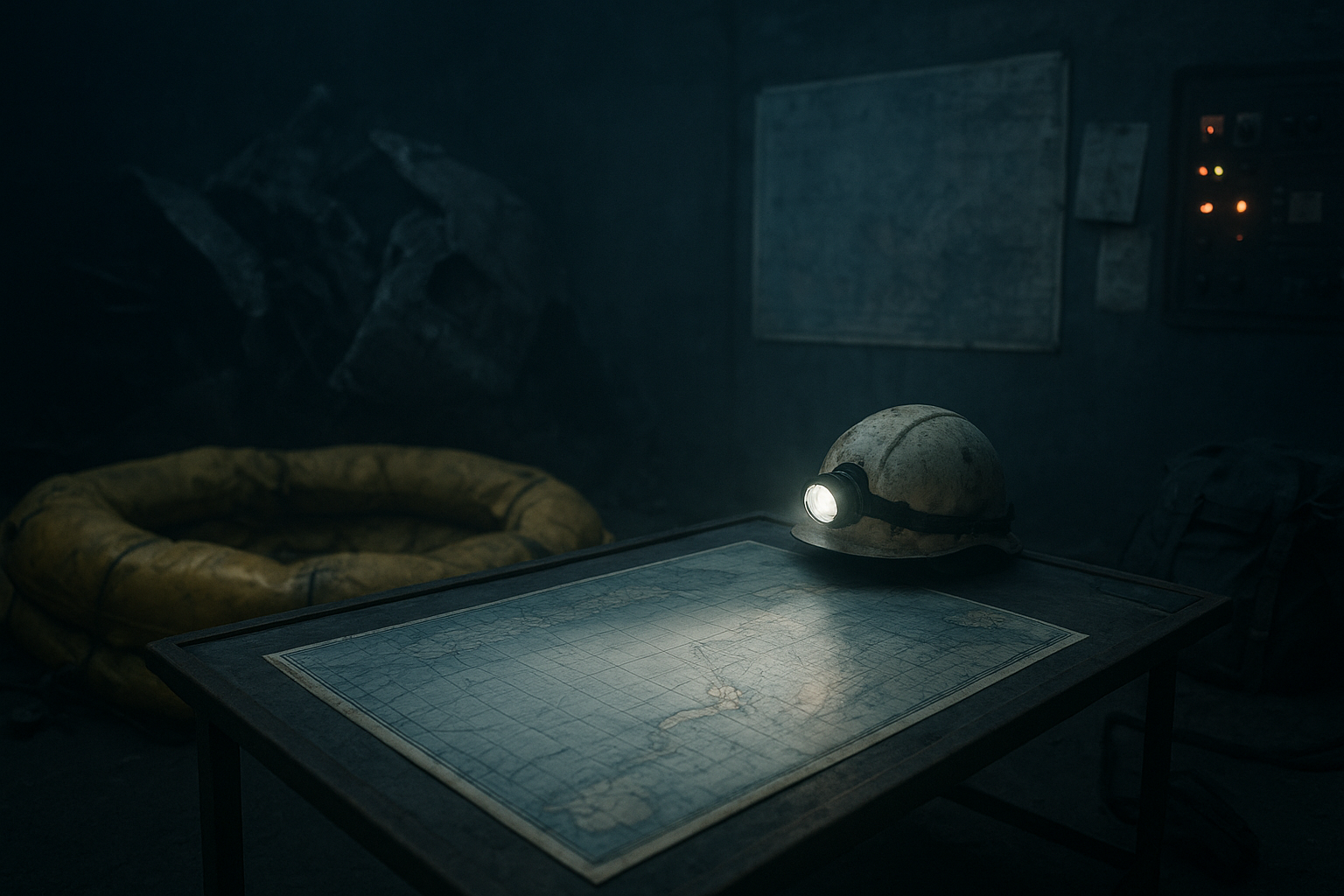
Survival stories disturb people for a different reason than mysteries or crimes. In many of these cases, the ending is known. Rescue came. A body kept breathing. Somebody walked out of the jungle, climbed from freezing water, knocked beneath twisted steel, or kept a mind intact one hour longer than any rational person should have been able to do. And still the story does not settle. It stays in the blood because survival is not clean. It is hunger, sound, pressure, hallucination, silence, and the moment a human being decides not to disappear yet.
That is why readers do not treat survival stories like ordinary historical summaries. They come to them like people entering an archive of border crossings. Every case begins at the edge where life should have tipped the other way. The fascination is not just in the outcome. It is in the mechanism. What exactly kept this person alive? Was it training, luck, weather, timing, improvisation, another person’s refusal to quit, or one small stubborn act that held long enough for rescue to catch up?
Unresolved mysteries produce obsession through uncertainty. Survival stories produce obsession through confrontation. They force the reader to imagine the body under pressure and the mind inside a narrowing corridor of choices. That confrontation lingers. It is why one shipwreck leads to another, why one avalanche or crash becomes the doorway to ten more, and why the best survival archives are built less like lists and more like documentary rooms linked by ordeal type, rescue mechanism, and the emotional shape of endurance.
The Master Archive Room
It is the master archive room for the cluster: a place organized by investigative lens rather than by simple popularity. Some survival stories are water ordeals. Some are entrapment stories. Some begin with a fall from the sky. Some are shaped by exposure, darkness, or buried space. Some are really stories about rescue systems under impossible strain. Others are about one person staying mentally intact after the ordinary structure of time breaks down.
That structure matters because survival readers rarely want one case in isolation. Someone who gets pulled into a raft story often wants the next ocean ordeal where thirst, drift, and hope become the real antagonists. Someone who starts with a cave or ship entrapment story usually wants another file where sound, darkness, air, and timing controlled everything. A plane-crash survivor leads naturally into jungle endurance, cold-water escape, or mountain disaster because the real connective tissue is not the setting. It is the survival pattern.
There is also a practical reason to organize the cluster this way. Some readers want one famous name. Some want a specific ordeal type like shipwrecks, cave rescues, or plane-crash survivors. Others are not searching for a person at all. They are searching for the feeling: true stories about impossible endurance, rescues against the clock, or the psychology of not giving up.
10 Real Survival Stories That Sound Impossible remains a strong gateway for broad curiosity. Lost at Sea Survival Stories is the focused ocean branch.
It also helps separate survival storytelling from motivational fluff. The strongest cases on the site are gripping because they stay concrete: what failed, what the body endured, what choice changed the outcome, what rescue took too long, and what the survivor carried out with them afterward. That documentary logic is what turns a cluster from interesting into authoritative.
In other words, this is not a roundup. It is the room above the rooms. The map above the corridor. The archive for readers who do not want one astonishing case. They want to understand why certain survival stories keep returning in the mind long after the rescue is over.
Ocean Ordeals Where Time Stretched Into Something Inhuman
Water survival stories often become the most obsessive because the setting removes ordinary measurement. On land, people think in miles, trees, roads, and shelters. At sea, the scale becomes abstract. Direction loses meaning. The horizon never changes enough. Hunger, thirst, salt, heat, and skin failure turn the body into a clock the survivor cannot stop watching.
José Salvador Alvarenga belongs near the center of this archive because long-drift survival strips a human life down to repetition, waiting, and raw refusal. The Pacific did not test him through one dramatic moment. It tested him through duration. See the full case here: 438 Days at Sea Survival Story — The Man Lost in the Pacific Ocean.
The three men adrift belong here because shared survival at sea creates a different pressure from solitary drift. Hope becomes social, then fragile, then contested. The ordeal is not just physical. It is collective endurance under eroding certainty. See the full case here: The Three Men the Ocean Forgot.
The USS Indianapolis survivors show the military version of the same pattern. Open water becomes a slow machine of exposure, thirst, fear, and attrition, where rescue feels morally urgent and physically delayed. See the full case here: Four Days in the Water: The USS Indianapolis.
Steve Callahan’s raft story deepens this branch because it turns improvisation into the real engine of endurance. The ocean does not merely threaten. It demands problem-solving day after day. See the full case here: Steve Callahan Survival Story — 76 Days Adrift and the Ocean That Kept Trying to Empty the Raft.
Readers stay with these stories because the sea erases the illusion of progress. A raft can move while a person remains trapped. Rescue can be possible without being near. That contradiction is the whole hook. The survivor is not inert, but neither are they truly free. Every passing day becomes both evidence of life and evidence of how enormous the threat still is.
Ocean stories also reveal how survival can become procedural. Fresh water, shade, fish, wounds, salt sores, navigation attempts, bird behavior, cloud cover, storm decisions, and rationing all become part of the narrative machinery. The reader is not only asking whether the survivor lived. The reader is asking how the system of staying alive held together for one more sunrise.
This is why the ocean branch works so well as a binge path. One drift file opens naturally into another. A reader who starts with the Pacific will often want the shipwreck next, then the wartime water ordeal, then the lifeboat file where survival became a technical war against dehydration, flesh damage, and despair.
The emotional pull at the end of these stories is blunt. Survival at sea is rarely triumphant in a simple way. It leaves behind a person who has seen time lose its structure. That is why ocean cases feel less like adventure and more like testimony.
Entrapment Stories Where Sound Became the Only Bridge Back
Some survival files revolve around movement. Entrapment stories revolve around the absence of it. Collapse, flooding, sinking, or burial transforms the environment into a sealed argument between time and breath. In these cases, survival becomes a fight to remain detectable. Not just alive, but findable.
The man trapped inside a sunken ship belongs here because the details are almost unbearably physical: darkness, steel, cold water, shrinking air, and the awful possibility that rescue might arrive close enough to hear but not to reach. See the full case here: The Knock in the Dark: 60 Hours Alive Inside a Sunken Ship.
The previously linked Bitterroot account could not be corroborated as a specific historical survival case. It is excluded from the documented examples in this archive.
The narrative titled “The Sound That Saved Them” also lacks corroboration as a specific historical rescue. It is excluded from these documented cases.
The Armenia rubble story expands the pattern beyond mechanics and into raw maternal endurance. Collapse stories do not only test the trapped body. They test what one person can keep doing for another in a space already turning into a tomb. See the full case here: Susanna Petrosyan and Her Four-Year-Old Daughter.
These cases stay with readers because they shrink the world so violently. In a drift story the horizon is too large. In an entrapment story the world is too small. Either way, scale becomes the antagonist. The survivor has to negotiate with space itself, whether that means conserving breath, staying conscious, making noise at the right intervals, or enduring the horrible uncertainty of not knowing whether rescuers are inches away or miles away.
Entrapment cases also generate one of the strongest documentary rhythms on the site: the rescue clock. Every chapter feels timed. Air, floodwater, cold, pressure, aftershocks, machinery, and fatigue keep narrowing the corridor. That is why these stories pull readers so hard into one more file. Once they understand the mechanics of one rescue window, they want to see how the next person kept theirs open.
And emotionally, these stories do something almost no other genre does. They make survival audible. A knock in the dark. A faint voice. A rescue team pausing because they think they heard life. That sound lingers long after the details blur.
Plane Disasters and Falls From the Sky
Crash survival stories have a unique place in the archive because they begin with sudden violence and then immediately split into second and third ordeals. The impact is only the first event. After that comes water, jungle, snow, fire, isolation, injury, or the burden of being alive when others are not.
Juliane Koepcke belongs in the front rank of this section because her story moves from impossible fall to jungle endurance without giving the reader time to recover. Survival begins in the air and keeps going after impact. See the full case here: Juliane Koepcke Survival Story: The Fall From 10,000 Feet and the 11 Days the Jungle Tried to Finish.
The Hudson landing belongs here because it shows a different survival pattern: precision under seconds, collective discipline, and the razor-thin line between disaster and evacuation. The ordeal is brief in one sense and total in another. See the full case here: Three Minutes to Impact: The Winter Afternoon That Refused to End.
Vesna Vulović belongs here because fall survival carries its own mythic charge. Readers are pulled in not just by the numbers, but by the bodily impossibility they seem to imply. See the full case here: Vesna Vulovic: The Woman Who Survived a 33,000-Foot Fall.
The Andes story belongs in this archive because the crash was only the gate. What followed was a mountain survival trial shaped by cold, injury, scarcity, grief, and decisions no one wants to imagine making. See the full case here: Andes Plane Crash Survival Story – The 72 Days on the Mountain and the Decision That Would Not Let Them Die.
This section matters because the public often remembers the headline event and forgets the architecture of what came after. But survival authority lives in the after. How long before rescue? What injuries were survivable? What terrain took over once the machine failed? How did social order change among the living? Which small decisions mattered more than the crash itself?
That is also why plane-disaster stories make such strong internal hubs. They do not stay in one genre. A single page can feed readers into jungle survival, cold exposure, sea evacuation, trauma recovery, and rescue logistics. The best crash narratives are crossroads. They send readers deeper into multiple survival sub-clusters at once.
Crash stories also connect naturally to deeper cluster branches. A reader can move from Juliane Koepcke into wilderness endurance, from the Hudson into rescue-system competence, from Vesna into fall survival, and from the Andes into one of the coldest group endurance stories ever recorded. That progression turns spectacle into structure. It gives the cluster authority beyond shock value.
The emotional residue of crash survival is never just amazement. It is the uncomfortable awareness that survival can begin after an event the mind still considers unsurvivable. That gap between expectation and body is one reason these cases refuse to fade.
Wilderness and Exposure Stories Where Nature Turned Personal
Not every survival file begins with a single mechanical catastrophe. Some begin with a person entering open land and then crossing, minute by minute, from confidence into exposure. In these stories the environment becomes intimate. Heat, cold, jungle, rock, or altitude stop being scenery and start behaving like personalities with bad intentions.
The named Baquedano avalanche account could not be substantiated and is excluded from the documented cases in this archive.
Louis Zamperini belongs here because his story crosses multiple survival modes — water, war, deprivation, and psychological endurance — showing how one ordeal can harden into another without relief. See the full case here: Louis Zamperini Survival Story — The Olympian Who Survived War and the Ocean.
Wilderness files grip readers because they feel ancient. Strip away aircraft, radios, roads, and schedules, and survival returns to the oldest terms: shelter, heat, water, food, direction, and the will to continue despite dwindling evidence that continuing will matter. The best of these cases do not romanticize nature. They show how quickly the world becomes indifferent once the systems around a person fail.
But this branch also reveals something else. Wilderness survival stories are often really stories about the mind resisting simplification. The body needs calories and warmth. The mind needs sequence. It needs a reason to move to the next ridge, survive one more storm night, or keep following a river that does not yet look like rescue. That psychological layer is what separates a documentary-grade survival story from a generic retelling.
Readers who stay in this section are usually not chasing the biggest miracle. They are chasing the slow burn: how a person kept making choices after conditions removed every reason to believe those choices would work.
Rescue Against Impossible Odds
Some survival cases are remembered not only because of what the trapped or stranded person endured, but because the rescue itself became a feat of adaptation. These are the stories where survival is shared across a whole chain: victims, divers, pilots, engineers, medics, searchers, families, and strangers working against a clock that should have already run out.
The Thai cave rescue belongs here because the real pattern is not only endurance underground. It is the construction of an almost improvised rescue doctrine under global pressure, bad weather, and impossible geography. See the full case here: Thai Cave Rescue — Twelve Boys and Their Coach.
The Hudson flight belongs here again because survival in that case depended on a clean handoff from cockpit skill to passenger discipline to water evacuation to immediate coordinated rescue. See the full case here: Three Minutes to Impact: The Winter Afternoon That Refused to End.
The Armenia rubble survival belongs here too because collapse rescues are never singular. One person may endure inside the void, but whole communities and teams become part of the mechanism that decides whether endurance turns into recovery. See the full case here: Susanna Petrosyan and Her Four-Year-Old Daughter.
These cases build authority because they show survival as a system, not only a personality trait. That matters. The strongest archive does not flatten every story into willpower. Sometimes will matters most. Sometimes logistics matter most. Sometimes training, infrastructure, weather windows, or one diver’s decision matter more than romantic narratives about toughness.
This section also creates a strong binge bridge into readers’ deeper questions. Why did this rescue work when others failed? How much depended on planning versus improvisation? At what point does survival stop being an individual drama and become a coordinated engineering problem? Those are authority questions, not just curiosity questions. They keep readers inside the cluster longer because they turn one dramatic story into a wider framework.
The emotional ending is different too. These stories often close with relief, but not simple relief. They expose how thin the margin was, and how many people had to keep succeeding in sequence for anyone to come home alive.
The Investigative Patterns That Repeat Across Survival Stories
The first pattern that repeats across the archive is ordeal conversion. A survival story almost never remains the thing it first appears to be. A plane crash becomes a jungle endurance case. A shipwreck becomes a dehydration case. A cave emergency becomes a rescue-engineering case. A building collapse becomes a sound-and-time case. Authority comes from tracking that conversion instead of stopping at the headline event.
The second pattern is scale distortion. Ocean survival expands the world until the survivor feels microscopic. Entrapment survival collapses the world until breath and inches become the only geography left. Wilderness stories alternate between both states: too much land, too little shelter. Readers keep returning because these stories force the imagination to operate at bodily scale rather than abstract scale.
The third pattern is time warping. Survival archives work when they respect duration. Some ordeals are remembered for seconds — a landing, a fall, an impact, one snap decision. Others are remembered for the long corrosion of waiting. Hunger is not dramatic in the same way a crash is dramatic, but over days it becomes a deeper antagonist than impact ever was. The strongest pages make both kinds of time legible.
The fourth pattern is that survival is rarely pure heroism. It is messier than that. People improvise badly, panic, freeze, bargain, hallucinate, become dependent, need others, fail, recover, and continue. Stories that leave those textures in place feel more documentary and more trustworthy. They also create stronger reader attachment because the survivor remains human instead of turning into a slogan.
The fifth pattern is rescue visibility. In many unforgettable cases, rescue is close enough to imagine before it is close enough to arrive. A plane may be searched for. Divers may be assembling. Families may be waiting on shore. A tapping sound may have been heard. A raft may exist on the horizon of possibility for days before any vessel appears. That near-ness without completion generates the same kind of pressure that unresolved mysteries create, but with a different emotional reward. Instead of closure, the reader wants contact.
A sixth pattern is aftermath. The archive should never pretend survival ends at extraction. The person who leaves the cave, raft, wreckage, or rubble void is not the same person who entered it. Some stories bend toward gratitude. Some bend toward trauma. Some become public myth. Some remain private burdens carried inside a body that technically lived. Keeping that aftermath visible is part of what turns the cluster from thrill content into authority content.
Seen together, these patterns explain why survival stories are one of the site’s strongest binge-read clusters. They are varied in setting, but disciplined in emotional architecture. They deliver crisis, endurance, adaptation, and narrow reversal. They also invite readers to compare mechanisms: water versus cold, isolation versus entrapment, solo endurance versus team rescue, luck versus preparation, minutes versus months. That comparative structure is what a real master archive is supposed to do.
It also improves SEO and crawl depth in a natural way because it mirrors how people actually read. Someone lands on a plane-crash survivor, then wants another sky-fall story, then a mountain endurance case, then a cave rescue, then an ocean drift. The archive gives that instinct a shape. Instead of random related links, it offers a documentary path.
Conclusion
The survival stories that last are not always the biggest disasters or the most famous headlines. They are the ones that show the exact point where the human body and mind should have yielded, then kept going through one more cold hour, one more empty day, one more pocket of darkness, one more stretch of sea, one more impossible decision.
That is what unites this archive. Ocean ordeals, buried survivors, plane disasters, cave rescues, wilderness breakdowns, and collapse stories do not belong together because they are simply extreme. They belong together because they reveal the same underlying truth in different forms: survival is rarely a single miracle. It is a chain of ugly, specific, pressure-shaped moments that somehow does not break in time.
Each file is its own ordeal. Together they become a map of human endurance at its outer edge.
🔎 Related Investigation:
🔎 If this investigation pulled you deeper into the mystery, continue with these next archive files:
- The Survival Stories Archive — Ocean Ordeals, Buried Survivors, Plane Disasters, Wilderness Escapes, and the Real People Who Refused to Die
- 10 Real Survival Stories That Sound Impossible (But Actually Happened)
- Lost at Sea Survival Stories — Real Shipwrecks, Lifeboats, and Ocean Ordeals That Should Have Ended in Death
Explore more Survival Stories investigations here:
Research Sources
The following resources were consulted to verify and update this article.
- University of Hawaiʻi at Mānoa / International Pacific Research Center — Castaway fisherman’s drift matches currents and winds
The university’s drift simulations assess whether José Salvador Alvarenga’s reported Pacific voyage was consistent with currents and winds; they do not independently prove every detail of his account. - National Naval Aviation Museum / Naval History and Heritage Command — The Raft
Museum account and surviving raft documenting the three airmen,34 days, rainwater and food caught at sea. - Naval History and Heritage Command — H-051-1: The Last Sacrifices
Navy historical analysis of the torpedoing, rescue failures, shark attacks and the August 2–3 rescue sequence. - Yankee / New England — Lost at Sea! — excerpt from Adrift
Callahan’s published firsthand account of the sinking, solar still, fishing, raft repairs and missed ships. - DCN Diving — DCN Diving Rescue Operation
The rescue contractor’s account and footage of the discovery inside Jascon 4. - Associated Press, published by Deseret News — Survivors: Armenian mother recounts sacrifices to save her child
Contemporary interview identifying Susanna Petrosyan, her four-year-old daughter, Leninakan and the December 14 rescue. - ABC News (Australia) — How teenager Juliane Koepcke survived a plane crash and solo 11-day trek out of the Amazon
Reporting drawing on Koepcke’s memoir and BBC interview, covering her background, injuries and jungle survival. - Federal Aviation Administration — Airbus SAS A320-214 — US Airways Flight 1549, N106US
The FAA’s accident lesson explains the engine damage, emergency procedures, water landing, and safety lessons. - Guinness World Records — Highest fall survived without parachute
Records the official 10,160-metre fall, its date and location, and the later challenge to the altitude. - Museo Andes 1972 — Tragedy / Miracle
The dedicated museum’s overview of the crash, survival conditions, avalanche and trek for help. - Smithsonian Magazine — ‘Unbroken’s Louis Zamperini Crashed Into the Pacific on May 27, 1943. Here is the Missing Air Crew Report
A National Archives archivist discusses the missing air crew report, alongside the crash date, eleven crew members, and survival timeline. - British Cave Rescue Council — A tense but joyful outcome for the cave rescue at Tham Luang Nang Non Cave
The July 10, 2018 briefing from the rescue organization records the successful extraction of all twelve boys and their coach.