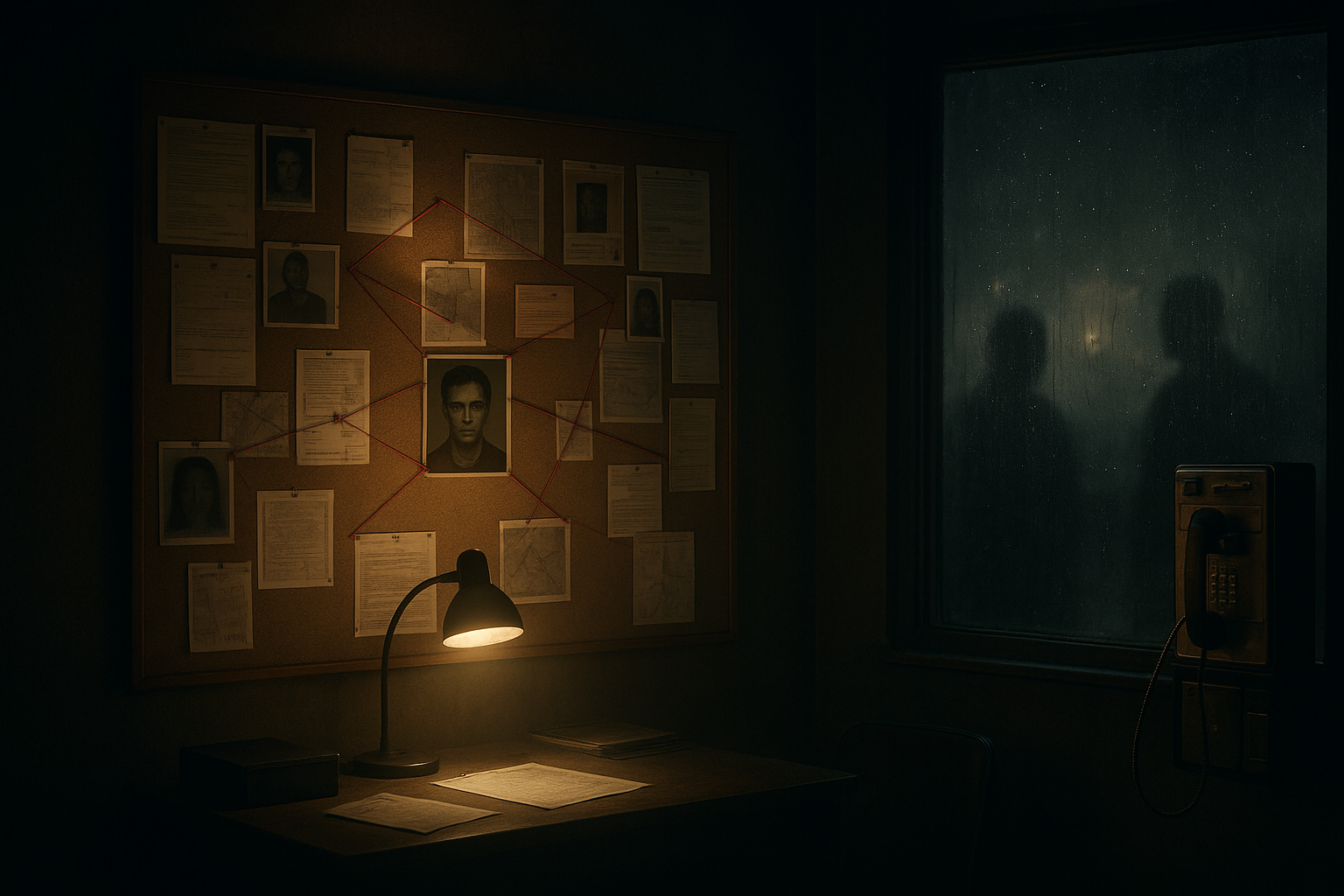
Disappearances become hardest to forget when one human thread survives longer than it should. The final person to see them. The final person to hear them. The ride that should have ended safely. The companion who watched the story narrow into something terrible. The clerk, the roommate, the driver, the friend, the stranger on the phone, the witness at the roadside. In those cases, the mystery does not begin in total darkness. It begins with one surviving human connection — and that connection often becomes the most painful thing left in the file.
That is what makes “last person to see them” cases different from broader disappearance archives. These stories are not only about where someone vanished. They are about the final relationship still welded to the disappearance. Sometimes that relationship looks innocent and tragic. Sometimes it looks suspicious from the first hour. Sometimes it remains stuck in the uneasy middle for years, forcing readers to keep returning to the same question: if this person was the final thread, why did the thread never lead all the way to the truth?
Not as a listicle and not as a generic collection of famous missing-person cases, but as a documentary archive of disappearances where the last witness, last ride, last call, last known companion, or last human contact never stopped shaping the case. Some belong to the last-phone-call wing. Some live in the final-hours wing. Some are rooted in roadside scenes, public spaces, bars, airports, neighborhoods, or vehicles found without their owners. What unites them is brutally simple: another person stood at the edge of the story, and even that was not enough to stop the case from going dark.
How This Archive Is Organized
This archive is organized by investigative lens rather than by chronology or fame. That matters because the “last person” pattern does not do only one thing. In some cases, it narrows suspicion around a final companion. In others, it preserves a witness who keeps the case emotionally alive while never quite becoming decisive. In others, the final contact is not suspicious in itself — a friend, a dispatcher, a family member, a clerk, a passerby — but the very existence of that contact makes the disappearance feel closer to explanation than it really is.
This page also sits above the site’s existing disappearance branches rather than replacing them. The deeper rooms already exist: The Unsolved Disappearances Archive — Timelines, Surveillance, Sightings, Vehicles, and the Cases That Still Refuse to End, Unsolved Disappearances Where the Final Hours Still Don’t Add Up, Unsolved Disappearances Where the Last Phone Call Still Doesn’t Make Sense, Unsolved Disappearances With Witness Sightings That Only Made the Mystery Stranger, Last Seen on Surveillance: 6 Disappearances Where the Final Footage Only Deepened the Mystery, and What Likely Happened? 7 Unsolved Disappearances Where the Evidence Points in One Direction. This archive is the hallway that explains why those branches keep feeding each other so naturally.
The final human thread is one of the strongest binge patterns in the entire cluster because it creates instant emotional structure. Readers do not simply ask what happened. They ask what the last witness saw, what the last companion knew, why the last ride ended this way, why the last caller heard panic without resolution, or why the final person in the chain never became the key everyone hoped they would be. That structure turns isolated cases into a real documentary corridor.
When the Final Witness Preserved the Last Ordinary Moment
Some disappearances stay alive because the final witness did not see violence, confession, or a clean break in the story. They saw something ordinary. That is exactly what makes these cases so difficult to shake. The missing person was still moving through a normal world. Workday. Parking lot. neighborhood walk. school route. friend circle. Nothing in the final observed moment looks large enough to support the ending that followed.
The Morning Jodi Huisentruit Vanished — And the Timeline That Still Haunts Investigators belongs here because Jodi Huisentruit’s case remains trapped inside a narrow, public morning window where nearby people and possible observations feel agonizingly close to usefulness. The witness layer is part of what keeps the case alive: it happened in a setting where someone should have retained more. Jason Jolkowski Disappearance — The Short Walk, the Vanishing Point, and the Timeline That Still Breaks Apart fits for an even colder reason. Jason Jolkowski’s short walk became one of the purest examples of a final ordinary movement slipping out of reality. Jennifer Kesse Disappearance — The Woman Who Vanished in Broad Daylight belongs here too because the apartment and workday setting made the final human edge of the story feel much closer than the case ever allowed it to become.
These cases connect naturally to Unsolved Disappearances Where the Final Hours Still Don’t Add Up and Last Seen on Surveillance: 6 Disappearances Where the Final Footage Only Deepened the Mystery, because once the final witness fails to stabilize the story, the investigation often migrates into timeline pressure and missing visual space. But the emotional center remains human. Somebody was near the truth. They just never got to hold onto it long enough.
That is why final-witness cases feel so invasive. They do not belong to a wilderness, an ocean, or a total void. They belong to the ordinary social world — and that social world still failed to preserve the answer.
When the Last Ride or Final Companion Became the Whole Tension of the Case
Some disappearances get welded to one final companion so completely that the case can never be discussed without them. A ride offered. A late-night handoff. A final social circle. A person left behind after everyone else dispersed. These are the files where the last known companion is not just a detail. They become the emotional pressure point readers keep circling.
What Happened to Maura Murray? Inside the Unsolved 2004 Disappearance belongs here because the roadside witness dynamic in Maura Murray’s case has never stopped shaping public imagination. The scene remains small enough that every human contact inside it feels decisive, even though the decisive answer never arrived. Lauren Spierer Disappearance — The Unsolved Case and Timeline of Her Final Night fits because Lauren Spierer’s final known circle did not clarify her fate so much as trap the case inside one night of proximity, fractured accountability, and missing certainty. Brian Shaffer Disappearance — The Bar Exit Nobody Saw and the Timeline That Still Refuses to Close belongs in this room because Brian Shaffer’s disappearance remains inseparable from the final people around him, the final environment, and the impossible feeling that the social scene should have yielded a cleaner ending than it did.
The deeper branch for this kind of pressure is Unsolved Disappearances With Witness Sightings That Only Made the Mystery Stranger, because companion-driven disappearances rarely stay cleanly inside one theory. The last person in the frame may become suspicious, tragic, exculpatory, or simply impossible to place with confidence. That instability is exactly what keeps the case alive.
Readers return to these stories because the final companion is not a clue you can comfortably file away. It is a living human hinge in a story that should have closed and did not.
When the Last Call Became the Final Human Bridge to the Missing Person
A last phone call changes the texture of a disappearance. Voices feel immediate. Panic feels measurable. A caller is still connected to someone on the other end of the story. That creates the illusion that the truth must be just beyond the final sentence, the final dropped signal, the final line that suddenly stops making sense.
What Happened to Brandon Swanson? The 47-Minute Phone Call, the Scream in the Dark, and the Search That Still Has No Ending belongs here because few disappearance cases are as dominated by one final human connection as Brandon Swanson’s. The call with his father should have kept him tethered to the world long enough for the case to close around him. Instead it became one of the most agonizing examples of a line surviving just short of resolution. Brandon Lawson Disappearance — The 911 Call That Still Makes No Sense fits for a similar but harsher reason: the 911 call remains one of the central emotional objects in the case, preserving distress without fully preserving context. Natalee Holloway Disappearance — The Graduation Trip She Never Came Home From also belongs here because part of what keeps the case so active is the brutally narrow final reachable window before the story passed into permanent argument.
If this is the angle that hooks you hardest, the direct next room is Unsolved Disappearances Where the Last Phone Call Still Doesn’t Make Sense. That archive exists because last-call cases create a very specific kind of obsessive reading pattern. People replay them not for atmosphere alone, but because the human connection feels like it should still contain the break point.
And that is what makes these disappearances unbearable. The person was not yet gone in the emotional sense. They were still in contact. They were still one voice away from rescue, understanding, or location. Then the bridge failed.
When the Final Public Sighting Opened More Questions Than It Closed
Public sightings are supposed to help. They establish movement, extend life past an earlier checkpoint, or place the missing person inside a still-readable world. But some of the strongest disappearance cases on the site prove the opposite. A sighting can expand the mystery rather than reduce it, because the person was seen and still not secured into explanation.
Andrew Gosden Disappearance — The Teen Who Took a One-Way Ticket to London belongs in this room because Andrew Gosden’s disappearance remains defined by the terrible contrast between a documented arrival and the lack of any stable human ending after it. What Happened to Lars Mittank? The Tourist Who Ran from the Airport and Vanished fits here because Lars Mittank’s last visible human interactions and final airport behavior transformed the case into one of the clearest examples of public-space visibility failing in real time. What Happened to Mekayla Bali? The Disappearance Timeline and Sightings That Still Don’t Make Sense also belongs here because Mekayla Bali’s known movements feel packed with human adjacency, purposeful stops, and near-contacts that should have clarified the story instead of widening it.
This section routes naturally into Unsolved Disappearances With Witness Sightings That Only Made the Mystery Stranger and The Final Timelines That Still Don’t Close: 9 Disappearances Reconstructed Minute by Minute, because public-sighting cases usually force the same two obsessions at once: who saw what, and exactly when the final humanly observed sequence stopped being normal.
That is why public sightings can be so cruel. They do not leave families with total darkness. They leave them with a final glimpse that keeps feeling like it should have mattered more.
When the Last Known Circle Stayed Too Close to the Case
Some disappearances continue pulling readers back because the final social circle never drifts far enough from the mystery to feel neutral. Friends, acquaintances, travel companions, people in the same night orbit — no single answer locks in, but the case keeps returning to the same cluster of proximity.
Lauren Spierer Disappearance — The Unsolved Case and Timeline of Her Final Night comes back into view here because the case is inseparable from the final people around Lauren, even when those connections refuse to become a completed theory. Amy Bradley Disappearance — What Happened to the Woman Who Vanished From a Cruise Ship? belongs here because Amy Bradley’s disappearance has never escaped the pull of the final shipboard social environment, where the limited circle should have made answers easier than they proved to be. Brian Shaffer Disappearance — The Bar Exit Nobody Saw and the Timeline That Still Refuses to Close also belongs here because the final night around Brian remains socially crowded and mechanically unfinished at the same time.
The reason these cases binge so well is that they behave like social mazes. Readers keep trying to sort loyalty, timing, memory, omission, fear, coincidence, and possible knowledge into one stable shape. It rarely stays stable. That instability is not a side effect. It is the reason the final social circle remains fused to the story.
This is where pages like What Likely Happened? 7 Unsolved Disappearances Where the Evidence Points in One Direction become useful, because social-proximity cases often overlap with evidence that seems to lean somewhere without ever finishing the work of proof.
When a Found Vehicle or Scene Still Kept the Final Human Question Alive
Recovered vehicles and scenes are usually treated as physical evidence first. But in many disappearances, they remain emotionally powerful because they preserve a final human question: who last saw the missing person there, who interacted with them just before the stop, who might have offered help, who heard the call, who drove away, who remained nearby, who should have known more?
What Happened to Maura Murray? Inside the Unsolved 2004 Disappearance fits this room again because the car scene is inseparable from the last witness logic surrounding it. Brandon Lawson Disappearance — The 911 Call That Still Makes No Sense belongs here for the same reason: the truck, the roadside, the call, and the final human interactions are all fused into one unresolved pressure point. Bryce Laspisa Disappearance — The Strange Drive Before He Vanished also fits because Bryce Laspisa’s long drive and the recovery of his car keep forcing readers back toward the human thread around the last known phase of his movement.
This is why the “last person” angle is not isolated from the site’s vehicle and scene archives. The strongest physical scenes are rarely just about place. They are about the final human bridge still attached to that place. Continue into What Happened After the Car Was Found? 6 Real Disappearances Where the Vehicle Was Recovered but the Person Was Not if the found-car logic is what pulls you deeper.
A scene can survive. A vehicle can survive. What makes these cases so durable is that the human relationship at the edge of the scene survives too — and still does not finish the story.
Why the Final Human Thread Keeps Pulling People Back
The strongest cases on this page all repeat one basic pattern. A disappearance does not immediately collapse into total absence. Instead, one person or one human connection remains attached to the final known chapter. A parent on the phone. A witness in the lot. A final companion. A ride. A social circle. A clerk, a stranger, a passerby, a person in the last room, the last bar, the last airport corridor, the last roadside encounter. That surviving human thread should make the case feel more solvable. Often it makes it more obsessive.
Why? Because human contact creates accountability in the imagination. Readers believe that if another person was there, somebody should know more, remember more, notice more, say more, or eventually break. Even when that belief is unfair in a specific case, it remains psychologically powerful. A disappearance with no surviving human bridge can be terrifying. A disappearance with one final bridge that never leads all the way to the truth feels almost intolerable.
It connects multiple existing investigative frameworks at once. Last-person cases route naturally into last-call archives, final-hours timeline hubs, witness-sighting collections, surveillance-based disappearances, and evidence-pressure pages. The cluster starts behaving like a real documentary ecosystem because the human thread sits inside nearly every strong disappearance pattern on the site.
Another reason these cases stay alive is that the final human thread is often ordinary. A call home. A casual ride. A friend seen at the end of the night. A quick interaction before work. A parent staying on the line. Nothing in those moments sounds mythic when it happens. It becomes mythic later because history hardens around that person and asks them to carry more explanatory weight than the moment itself ever promised.
These stories also generate participatory reading behavior. People compare statements. They replay calls. They map social circles. They reconstruct routes between people. They argue over whether the last witness mattered, whether the final companion was truly last, whether someone was omitted from the chain, whether the final observed contact was innocent, loaded, misleading, or just tragically insufficient. The reader stops being a spectator and becomes an analyst of relationships.
There is also a deeper documentary pattern running through these cases. The final human thread often becomes the emotional identity of the disappearance. Brandon Swanson is not only the young man who vanished in a field. He is the voice who stayed on the line with his father until the line failed. Brandon Lawson is not only the owner of an abandoned truck. He is the man inside the 911 call that still sounds like a crisis nobody can fully reconstruct. Lauren Spierer is not only a missing woman after a night out. She is the center of one social orbit that should have produced a stable ending and never did. The final person in the chain becomes part of the case title in the public mind, even when that person never becomes a legal answer.
That pattern matters for authority because it explains how readers move between stories. Someone who enters through a last-call disappearance often wants another case where communication survived longer than location. Someone pulled in by a final-companion case usually wants the next story where social proximity created more suspicion than certainty. Someone who starts with a final witness at a roadside scene often wants the next disappearance where one stranger, one driver, or one brief public contact should have been enough to keep the timeline from breaking. These are not random clicks. They are movements through one recurring investigative architecture.
It also matters because the last human bridge often functions as a filter on theory. The person at the edge of the story can make some explanations feel impossible and others feel heavier. A final witness can narrow the route. A final companion can compress the timeline. A last call can prove panic, confusion, direction, or at least continued life past one assumed point. Even when none of those things solves the case, they force the mystery into a more specific shape. That specific shape is exactly what makes certain disappearances feel so much more durable than broad unsolved cases with almost no surviving human thread at all.
That is why the “last person to see them” angle works so well as a master authority page. It does not flatten disappearances into one repetitive mood. It organizes them around a recurring investigative wound: someone else stood at the edge of the missing person’s story, and even that closeness did not save the answer.
Seen together, these cases also teach a broader lesson about unresolved investigations. The last person is not always the suspect. The last witness is not always the solution. The final human bridge is often simply the place where certainty should have lasted a little longer than it did. But that failure — the failure of another human connection to hold the story in place — is exactly what keeps these cases alive in memory.
People search for last person seen with, last phone call, final witness, last companion, final sighting, who saw them last, who they were with before they vanished, what the final hours looked like, and whether the evidence points toward one last person in the chain.
Conclusion
Every disappearance archive contains stories defined by silence. The cases gathered here are defined by something more painful: one last surviving human connection. A witness. A companion. A call. A ride. A final person who remains fused to the mystery because the story should have stayed legible for a little longer than it did.
That is why this page matters above the sub-hubs. It is also about the final relationships that should have held the truth in place and failed. The last person to see them is not just a detail in these cases. It is often the emotional engine that keeps the case alive.
Related investigations include the timeline pages, the witness pages, the surveillance pages, the evidence-pressure pages, and the larger disappearance authority room surrounding them. Because once one human thread remains attached to the story, people almost never stop pulling on it.
🔎 Related Investigation:
🔎 Related Investigation:
🔎 If this investigation pulled you deeper into the mystery, continue with these next archive files:
- The Unsolved Disappearances Archive — Timelines, Surveillance, Sightings, Vehicles, and the Cases That Still Refuse to End
- Unsolved Disappearances Where the Last Phone Call Still Doesn’t Make Sense
- Unsolved Disappearances With Witness Sightings That Only Made the Mystery Stranger
Explore more Disappearances investigations here: